



Industry News
Home / News / Industry News / Could Wood Handrail Router Bits Enhance Efficiency in Woodworking Tasks
Woodworking is one of those fields where the small stuff ends up deciding the whole impression a piece leaves behind. A wooden handrail might look like a fairly basic component at first glance, but getting one right takes real planning, careful shaping, and a finishing process that doesn't cut corners. The surface has to feel right under someone's hand. The curves need to read as natural rather than forced. And the whole thing has to fit whatever design language surrounds it.
For a lot of woodworkers, the hard part isn't just making one beautiful piece. It's managing time and keeping quality consistent across an entire project. Once a job calls for several matching pieces, that same shaping work repeated over and over turns into a genuinely demanding chunk of the schedule.
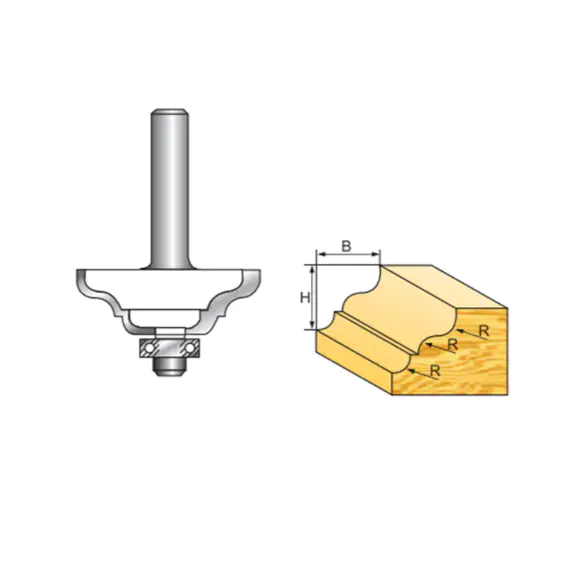
That's exactly where wood handrail router bits enter the conversation. These tools exist to shape handrails and similar curved profiles, and their value goes beyond just the final shape they leave behind — they can genuinely change how smoothly a project moves from one stage into the next.
As workshops keep hunting for practical ways to tighten up their daily operations, specialized woodworking tools have started pulling in more serious attention. Plenty of professionals and dedicated hobbyists are weighing how these tools might support their creative work while cutting out effort that just doesn't need to be there.
Shaping wood by hand takes real patience and years of built-up experience. Craftsmen routinely spend a significant chunk of time checking curves, tweaking edges, refining surfaces bit by bit. The results can be genuinely beautiful, but getting there often demands a lot of effort along the way.
A well-suited router bit opens up a different path. Rather than leaning entirely on manual shaping, woodworkers get access to something more structured. The tool produces a shape that's a lot more predictable, freeing up attention for other parts of the project that need it more.
In the day-to-day of running a workshop, that predictability actually matters quite a bit. Once a worker knows how a tool is going to behave, planning gets a lot simpler. Materials get prepped more efficiently, and the whole workflow runs with fewer interruptions along the way.
For handrail work specifically, this pays off in a real way. A handrail gets touched constantly by hand, so surface quality isn't just cosmetic — it's functional. Smooth transitions and comfortable edges matter just as much as how the piece looks.
None of this replaces woodworking knowledge, to be clear. Experienced workers still need a real feel for wood characteristics, design requirements, and finishing methods. The router bit just lends extra support during that shaping stage — nothing more, nothing less.
A lot of people glance at a wooden handrail and see something pretty basic. But building one right takes real attention to both how it looks and how it actually functions.
A handrail has to sit comfortably within the overall style of a space, and it has to feel natural in someone's grip. Those two demands together create a handful of genuine challenges for the woodworker involved.
| Common Challenge | Impact on Woodworking Process |
|---|---|
| Creating smooth curves | Requires careful shaping and adjustment |
| Maintaining similar shapes | Needs consistent working methods |
| Preparing surfaces for finishing | Influences the final appearance |
| Handling custom designs | Requires flexible production skills |
Every piece of wood behaves a little differently, too. Grain direction, moisture condition, and design choices all shape how the piece responds during shaping. A method that works beautifully on one project might need real adjustment on the next.
That's really why efficiency in woodworking was never just about raw speed. It's about landing on a working method that trims unnecessary steps while still protecting the craftsmanship that makes the piece worth building in the first place.
Consistency is a genuine concern across a lot of woodworking projects. A single handmade item might only ever need one unique shape. But bigger jobs usually call for several matching pieces working together.
Picture a staircase project with multiple wooden sections involved. If each handrail segment comes out slightly different, installation and finishing both get a lot messier than they need to be.
Wood handrail router bits build a genuinely repeatable process. Once the right shape gets dialed in, matching pieces can follow that same path without reinventing the wheel each time.
That brings some real, practical upside:
For a workshop, that consistency genuinely shapes customer satisfaction. Clients ordering custom wood pieces usually expect them to look unified as a set, and a reliable shaping process is what actually delivers on that expectation.
Handmade woodworking still leans hard on human judgment throughout, though. The tool lends assistance — the craftsman still decides how the finished piece should ultimately look and feel.
Handrails might be the obvious application here, but the usefulness of these tools stretches well beyond staircases alone.
A lot of woodworking projects call for curved edges or decorative profiles somewhere in the mix. A bit designed for shaping handrails can end up handling similar jobs anywhere smooth wood transitions are needed.
| Project Type | Possible Application |
|---|---|
| Staircase Design | Creating comfortable handrail shapes |
| Custom Furniture | Adding curved edge details |
| Interior Decoration | Producing decorative wooden features |
| Restoration Projects | Recreating traditional wood styles |
| Personal Woodworking | Supporting creative handmade projects |
That kind of flexibility makes these bits genuinely interesting to a wide range of users. A professional shop might lean on them for regular production runs, while a hobbyist might reach for one only occasionally, for a specific creative project that calls for it.
Growing interest in customized interiors has pushed detailed woodworking further into the spotlight, too. A lot of spaces now lean on natural materials and personalized touches, and tools built for careful, consistent shaping keep earning their place in that trend.
A woodworking project is really a chain of individual steps — material prep, shaping, sanding, finishing, all feeding into the next. If one link in that chain slows down, it drags on everything downstream from it.
Picking the right tools genuinely smooths out the whole working environment. When workers aren't stuck fighting through basic shaping tasks, they've got more attention to spend on the design details that actually make a piece stand out.
Productivity was never really about cranking out more volume, either. A lot of it comes down to cutting out effort that simply doesn't need to be there.
A woodworker might end up spending noticeably less time wrestling a rough shape into place, and a lot more time polishing the surface finish instead. That's a much better balance between raw efficiency and the craftsmanship that actually matters.
That balance carries even more weight in smaller shops. A lot of independent makers are juggling several roles at once, and a tool that lightens the daily load helps them organize their workload a lot more sanely.
Beginners in woodworking tend to run into the same wall pretty consistently — they want professional-looking results, but they haven't put in the years of shaping practice yet to get there naturally.
Specialized tools can genuinely help bridge that gap. They let a beginner start understanding how different profiles come together and how wood actually responds while being shaped, well before they'd get there through trial and error alone.
That said, learning still takes real attention. Beginners need to understand proper handling and build up through steady practice — the tool supports that process, but it doesn't replace the experience that only comes from putting in the hours.
For small workshops, these bits also add real flexibility. A lot of small operations take on a mix of different project types, and having equipment that flexes across multiple design needs makes planning noticeably easier.
Whether a router bit makes sense really comes down to the kind of work on the table. For anything involving shaped wooden surfaces, it tends to earn its spot in the workshop pretty quickly.
Woodworking has always blended traditional skill with evolving methods. Craftsmen still hold handmade quality in high regard, but they're also constantly on the lookout for ways to tighten up their own workflow.
Modern woodworking was never about tossing out traditional technique. More often, it's about finding better ways to support the skilled work that's already happening.
Wood handrail router bits sit right in that balance. They lend a hand during the shaping stage while leaving every creative call exactly where it belongs — in the maker's hands.
As demand for customized wood pieces keeps growing, efficiency is going to stay a live topic. Workshops need tools that help manage a project's flow without pulling focus away from quality and design.
The relationship between craftspeople and their tools keeps evolving right alongside all of this. Good tools were never meant to replace experience — they just open up more room for skilled workers to put that knowledge to use in a way that feels a lot smoother and a lot more organized.

 4008-253-777
Industrial Zone, Furong Town, Yueqing City, Zhejiang Province, China


+86-0577-62298888
+86-0577-62299999

+86-0577-62295777
+86-0577-62297777
Copyright © Fangda Holding Co., Ltd. All Rights Reserved
Metal Drill Bit Sets Suppliers
