



Industry News
In many woodworking spaces, edge design shapes how a piece is seen and used. A straight cut may serve a purpose, yet a shaped edge adds a different feeling. It softens lines. It creates rhythm. It brings detail without changing the core structure. Among the tools used for this task, the double Roman router bit holds a steady place.
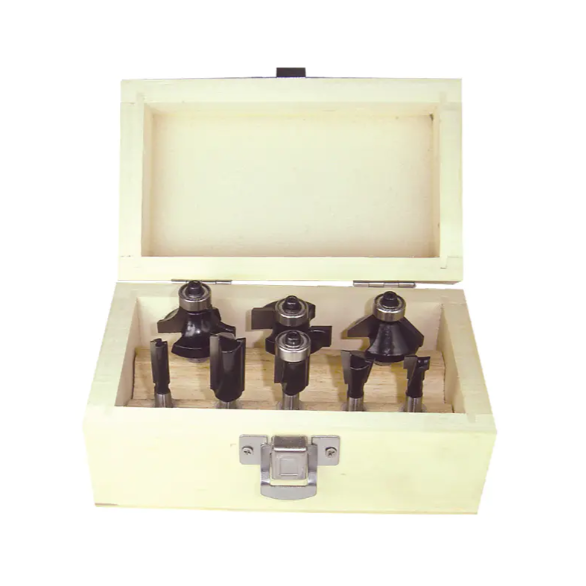
Its form allows two curved profiles to meet along the edge. This creates a layered look. The shape is not heavy. It is also not too simple. Many users see it as a balanced option when they want to move beyond plain edges but avoid overly complex decoration.
Recent discussions in the woodworking field often focus on how tools support both design and efficiency. The double Roman router bit appears often in these conversations. It reflects a shift toward tools that offer visual value while remaining practical in daily work.
An edge design is more than a line along a surface. It affects how light moves across the material. It also changes how a hand feels the edge. Balance in design comes from proportion. It is the relationship between curves, depth, and spacing.
A double Roman profile creates this balance by combining two gentle curves. These curves meet in a way that avoids sharp contrast. The result feels smooth to the eye.
Balanced edge design often includes:
When these elements come together, the edge supports the design instead of overpowering it. This is one reason why the double Roman style continues to appear in both simple and decorative projects.
The shaping process is guided by the form of the bit. As it moves along the material, it removes sections in a controlled pattern. The two curves are formed in a single pass when conditions are stable.
This creates a layered edge that feels structured yet soft. The shape is not random. It follows a consistent path defined by the bit.
Users often notice several effects:
These effects are subtle. They do not draw attention in a loud way. Instead, they add depth to the design.
Decorative work often requires a balance between detail and restraint. Too much detail can make a piece feel crowded. Too little may leave it looking unfinished.
The double Roman router bit offers a middle ground. It adds shape without overwhelming the surface. This makes it suitable for many types of projects.
Common uses include:
In each case, the goal is similar. The edge should support the overall design. It should not compete with it. The double Roman profile helps achieve this by staying within a moderate visual range.
Daily work in a workshop often involves repetition. Cutting, shaping, and assembling happen in cycles. A tool that fits easily into this routine becomes part of regular use.
The double Roman router bit is often used in:
It does not require a special setup beyond standard preparation. This makes it practical for repeated use. Users can apply it to different pieces without major adjustments.
Its role in daily tasks is also tied to its versatility. It works on various edge lengths and shapes. This reduces the need to switch tools frequently.
Visual style is shaped by small details. The edge is one of those details. Even a slight curve can change how a piece feels.
The double Roman profile creates a layered effect. This adds depth without making the design heavy. The curves guide the eye along the edge. This creates a sense of movement.
Some visual characteristics include:
These features help the piece feel complete. They also allow the edge to blend with different design styles. It can appear in both traditional and modern settings without conflict.
The cutter sets the basic hole shape, but plenty of on-the-job details decide how clean the finished edge turns out.
These are the main things that make a difference:
Even tiny slips in any of these points ruin the finish. Moving the tool evenly leaves smooth, consistent edges; jerky, unsteady movements create rough, uneven cuts.
Most people get a better feel for controlling the cutter after using it many times. With more practice, they learn to guide the tool without wobbling, and every cut ends up looking much more uniform.
Some tools create single curves or straight edges. These are useful for basic shaping. They serve many purposes in woodworking.
The double Roman router bit differs in its layered form. It combines two curves instead of one. This adds complexity without making the process difficult.
A simple comparison can help show the difference:
| Tool Type | Edge Style | Visual Effect |
|---|---|---|
| Straight cutter | Flat edge | Clean and minimal |
| Single curve bit | Rounded edge | Soft and simple |
| Double Roman bit | Layered curves | Balanced and decorative |
This comparison shows why the double Roman profile is often chosen when a project needs more than a basic finish but less than a highly detailed pattern.
Workshops continue to evolve. Tools change. Materials shift. Yet some tools remain in use because they adapt well to different needs.
The double Roman router bit remains relevant for several reasons:
These qualities align with current working habits. Many users look for tools that can handle multiple tasks without adding difficulty.
There is also a growing interest in handcrafted details. Even in modern settings, small design elements are valued. The double Roman profile offers a way to include such detail without changing the overall workflow.
Consistency is important when working on sets or repeated designs. Edges should match from one piece to another. This creates a unified look.
To maintain consistency, users often focus on:
These steps help reduce variation. Over time, users develop habits that support uniform results.
A consistent edge also improves how pieces fit together visually. It creates a sense of order in the final arrangement.
Tools influence how users feel during work. A tool that responds predictably allows users to focus on the task instead of the process.
The double Roman router bit contributes to this experience by offering a clear and repeatable result. Users can anticipate the shape it will create. This reduces uncertainty.
The experience is shaped by:
These elements make the tool suitable for both experienced users and those still learning.
Edge design is evolving along with broader design trends. There is a shift toward clean lines combined with subtle detail. Large decorative elements are less common in some settings. Instead, smaller details are used to add character.
The double Roman profile fits into this trend. It provides detail without dominating the design. It works well with both simple and more detailed pieces.
This shift reflects a broader change in how people view design. There is more attention on balance and proportion. Tools that support these ideas remain in regular use.
Selection often depends on the intended use. While the general shape remains consistent, users think about how it will fit into their work.
Considerations may include:
These factors help determine whether the double Roman profile is suitable for a given task. In many cases, it becomes part of a standard set used for everyday work.
Familiarity grows through repetition. As users apply the tool across different projects, they begin to understand its behavior.
They learn how it responds to changes in movement. They also recognize how small adjustments affect the final shape.
This familiarity leads to:
Over time, the tool becomes part of routine practice. It is no longer seen as a special tool but as a regular part of the workflow.
The double Roman router bit is not limited to a single scale of work. It can be used on small decorative pieces as well as larger surfaces.
In small projects, it adds detail without taking up much space. In larger projects, it creates a repeating pattern that ties the design together.
This ability to scale across different project sizes adds to its flexibility. Users do not need separate tools for each type of task.
The result is a more efficient workflow. One tool can support a range of design needs without requiring constant changes.
Every workshop develops its own habits. These habits shape how tools are used and stored. They also influence how often a tool becomes part of daily work.
In some spaces, tools are selected based on speed. In others, the focus is on detail. The double Roman router bit fits into both approaches.
It can be used quickly for routine shaping. It can also be applied carefully for more detailed work. This adaptability allows it to fit into different working styles.
Over time, these habits reinforce the tool's role. It becomes part of the regular set used to complete tasks efficiently while maintaining a certain level of design quality.

 4008-253-777
Industrial Zone, Furong Town, Yueqing City, Zhejiang Province, China


+86-0577-62298888
+86-0577-62299999

+86-0577-62295777
+86-0577-62297777
Copyright © Fangda Holding Co., Ltd. All Rights Reserved
Metal Drill Bit Sets Suppliers
