



Industry News
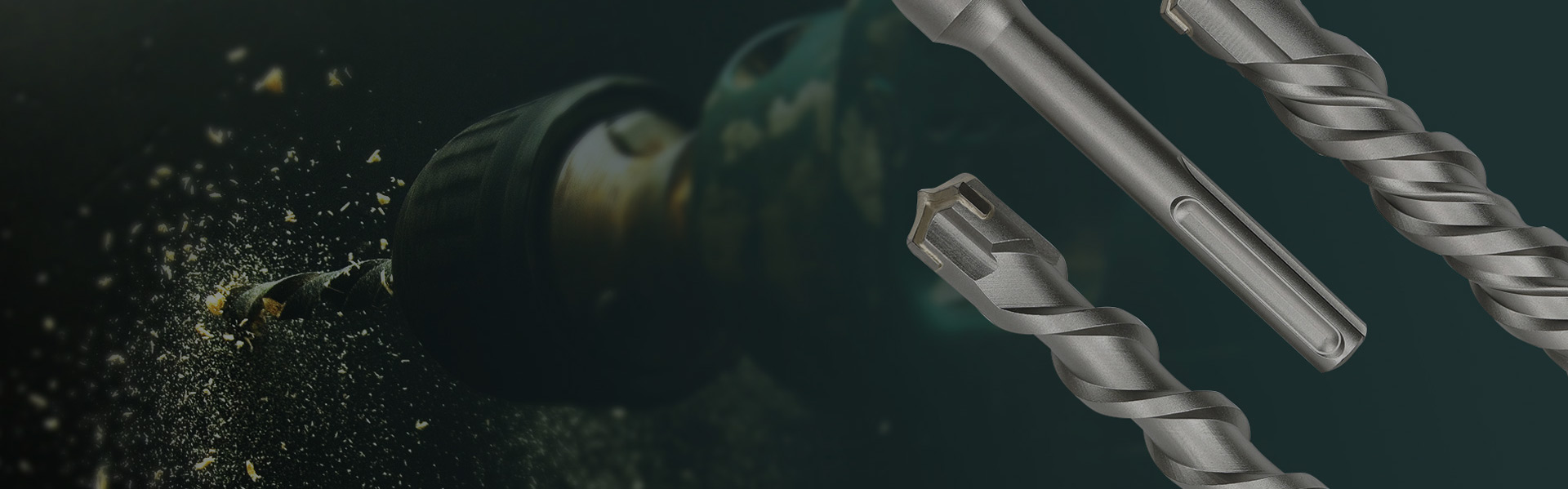
Selecting a reliable tool for demanding tasks calls for careful attention to how a product is made and how it behaves in everyday use. The decision often narrows to factors such as raw material, heat treatment, edge geometry, and resistance to wear.
A chisel's core depends on the alloy and how that alloy has been processed. Manufacturers that focus on long-term usability typically begin with a steel grade selected for its balance of toughness and wear resistance rather than extremes of any single property. After selection, the metal enters a controlled thermal cycle intended to refine grain structure and achieve a stable condition throughout the working section. The result should be a material that resists cracking under repeated impact while still holding a working edge. Surface treatments or finishes can add a further layer of rust resistance, reducing routine maintenance without changing the base material's mechanical character.
Hardness is often cited as a primary metric, but it exists in a tradeoff with toughness. A tool that is very hard but brittle will chip or fracture in heavy work, while a tool that is very tough but soft will dull quickly. A balanced approach to hardening and tempering produces a cutting edge that can maintain its shape through normal use and can also tolerate the shock of hammer blows. Practical evaluation considers how a chisel behaves after a period of use: whether the edge can be restored with ordinary sharpening, whether micro-fractures appear, and whether the tool retains its intended geometry. These are the qualities that affect daily productivity more than any single numerical rating.
Consistency across a product line matters for professionals who replace multiple tools over time. Processes such as forging followed by quenching and tempering, followed by inspection of heat treatment outcomes, tend to yield repeatable performance when they are applied with clear process control. Dimensional accuracy, uniform heat treatment, and controlled finish reduce the variability users encounter when swapping tools during a job. Quality control that includes visual and mechanical checks helps ensure that individual items match the specifications promised at purchase, which in turn supports predictable performance on the worksite.
Edge design is central to how a chisel cuts and how long it stays useful between sharpenings. A carefully ground angle and a consistent microbevel can alter cutting forces and make material removal more efficient. Tools intended for heavy demolition may use a geometry that favors impact resistance, while those intended for finishing favor a finer edge. The balance chosen by manufacturers affects not only cutting behavior but also how easily the edge can be maintained in the field. A product that accepts straightforward resharpening without loss of profile reduces downtime.
Durability can be understood as a combination of wear resistance, resistance to impact damage, and stability of the tool under repeated thermal or mechanical cycles. Durable tools tend to show gradual wear patterns that allow users to predict when maintenance will be needed rather than sudden failure. Features that contribute to durability include uniform material properties, protective surface finishes, and well-matched hardening and tempering processes. In practice, this means a chisel that stays serviceable through multiple work sessions and responds well to routine maintenance.
A tool must also be comfortable and safe to use. Handle shape, weight distribution, and the interface between striking surface and handle all play a role in how a tool performs for extended tasks. Excessive vibration, awkward balance, or a poor hand interface will reduce control and increase fatigue, even if the cutting edge itself is well made. A well considered design helps users maintain consistent strikes, which can extend the life of the tool and improve the quality of work produced.
Selecting an appropriate implement for demolition, shaping, and finishing work requires an understanding of how specific design features match practical tasks on site.
When removing brick, tile, or mortar, an implement must tolerate repeated impact without losing its working shape. Tools used for masonry removal generally combine a robust striking face with an edge geometry that displaces material rather than attempting to slice it cleanly. This reduces the risk of tip damage while allowing controlled removal of bonded layers. In practice, users benefit from an implement that returns to a useful profile after routine sharpening and that resists surface corrosion in humid conditions so handling time is not dominated by maintenance.
Cutting or opening joints in concrete slabs and walls is a task where control and shock resistance matter. For shallow, precise removals around joints or embedded fixtures, a tool that transfers impact energy efficiently to the working edge helps reduce user fatigue and improves accuracy. The preferred approach is to use a blade geometry that balances a firm edge with an ability to absorb repeated hammer blows. This enables workers to produce consistent grooves or clearances while limiting side damage to surrounding concrete, which is particularly important in renovation work where intact adjacent surfaces are required.
Tile removal and the cleaning of old mortar in preparation for regrouting demand a tool that can operate in confined spaces and that keeps a predictable edge under intermittent heavy use. Here, a combination of a narrow profile for access and a face hardened enough to resist deformation is useful. The tool should also be easy to reposition and control, as tile settings often vary and delicate handling reduces waste of reusable pieces.
Shaping natural stone or preparing joints for repointing requires a more refined touch than demolition. An implement with attention to edge geometry enables craftsmen to remove small volumes of material with repeatable strokes. This preserves desired surface textures and helps achieve tight fits between stones. Users performing this kind of work value implements that respond well to hand finishing and that hold a workable profile throughout a session of detailed shaping.
In woodworking or when adjusting wooden frames during renovation, a tool that combines a controlled cutting edge with shock-absorbing backing can be helpful. While heavy demolition blades are unsuitable for fine woodwork, a model designed with a finer angle and a polished bevel can perform delicate paring and shaping. The key attributes for such tasks are a consistent bevel, smooth metal finish near the edge to reduce drag, and the ability to be resharpened to a predictable angle.
Removing old plaster or patching drywall typically requires an implement that can strip layers without gouging the underlying lath or backing. A flatter edge profile that distributes force over a wider area reduces the chance of creating holes that then need repair. For repair work, a tool that keeps its line through continuous use and that is safe to handle near wiring and pipes is preferred; secure attachment between striking surface and handle improves control when working around obstructions.
Tasks that require prying or freeing anchored hardware place stress on both the edge and the body of the implement. In these situations, a tool with a reinforced shoulder and a well-supported blade resists bending and reduces the chance of catastrophic failure. The combination of a sturdy shaft and appropriate tempering helps the implement withstand levering actions without deformation that would render it unusable.
The hand tool sector is experiencing a quiet transformation. Advances in metallurgy, production methods, and digital support systems are reshaping how tools are designed, made, and maintained. For professionals and enthusiasts who rely on consistent performance during building and renovation work, shifts in material science and factory practice offer practical benefits rather than abstract promises.
Material choice remains the foundation of durable hand tools. Recent developments focus on alloys that balance wear resistance and impact tolerance without requiring extreme processing. Powder metallurgy and refined alloying techniques allow manufacturers to tailor microstructures with fewer impurities and more uniform grain size. Complementary thermal treatments, including controlled quenching and tempering cycles, produce steels that maintain edge geometry while tolerating repeated shock.
Beyond bulk chemistry, surface engineering has become more prominent. Ion nitriding, physical vapor deposition, and thin ceramic films can reduce surface wear and corrosion while preserving the substrate's mechanical behavior. These coatings are designed to be thin enough not to interfere with resharpening, yet robust enough to reduce routine surface maintenance. The net result is a tool that requires less frequent attention in wet or abrasive environments and that retains useful service characteristics over many cycles of use.
Traditional forging remains relevant for tools that need a continuous grain flow and impact resistance. At the same time, additive manufacturing is finding niche roles where complex internal geometries or integrated features can improve function. Hybrid production strategies that combine forged blanks with precision machining or targeted additive features enable designs that were hard to achieve with conventional methods alone.
CNC-controlled finishing and automated heat treatment offer higher repeatability across batches. When combined with in-line nondestructive testing, manufacturers can reduce variability that would otherwise surface in the field as inconsistent wear or unexpected failure modes. The practical effect for users is greater predictability: replacement parts and spare tools behave in similar ways, reducing time spent adjusting techniques for slightly different tools.
Digitization of production workflows creates opportunities for traceability and quality assurance. Embedding batch identifiers or machine-readable codes on individual tools supports supply chain transparency and helps end users verify material provenance and treatment history. For institutions that manage large fleets of tools, access to digital records enables planned maintenance and better inventory control.
Choosing a suitable chisel depends on aligning the tool’s technical attributes with the user’s working habits. Attention to material selection, heat treatment balance, consistent manufacturing, sensible edge geometry, and ergonomic design together determine how a tool will perform over time.
 4008-253-777
Industrial Zone, Furong Town, Yueqing City, Zhejiang Province, China


+86-0577-62298888
+86-0577-62299999

+86-0577-62295777
+86-0577-62297777
Copyright © Fangda Holding Co., Ltd. All Rights Reserved
Metal Drill Bit Sets Suppliers
