



Industry News
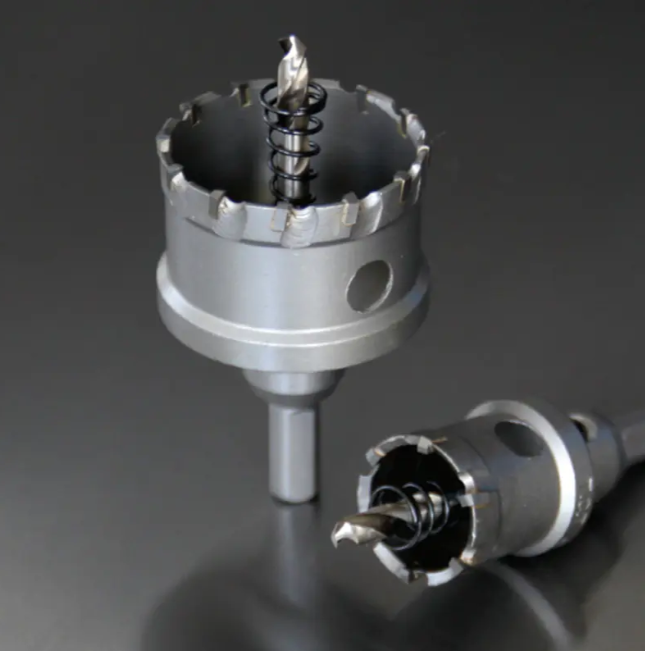
A single hole saw that works across wood, metal, and plastic sounds like a simple idea. One tool for different surfaces. Less switching. Less setup. Faster progress on site or in a workshop.
In real use, the answer is not a straight yes or no. The same tool can be used on different materials, but the outcome depends on how it is handled, what material is being cut, and how stable the working conditions are.
This topic has gained more attention as many tasks now involve mixed materials in one project. Walls, panels, fittings, and fixtures often combine different surfaces in a small space. That changes how tools are used day to day.
The main reason is simplicity.
In practical work, switching tools takes time. It interrupts flow. It also increases the number of tools that need to be carried, stored, or maintained.
A single cutting tool that can move between different surfaces reduces that effort. It creates a more continuous working rhythm.
There is also a growing preference for flexible tools. Many users prefer fewer items that can handle more situations instead of many tools with narrow use.
This does not remove the need for control. It only changes how the work is organized.
Wood, metal, and plastic do not behave the same way under cutting force. Each reacts in its own pattern.
Wood is generally softer and more forgiving. It can be cut smoothly, but uneven pressure may cause rough edges or small breaks along the surface.
Plastic behaves differently. It is sensitive to heat and pressure. If movement is too fast or unstable, the surface may deform slightly instead of cutting cleanly.
Metal is more resistant. It reacts slowly and requires steady, controlled movement. Any instability is more visible in the final result.
These differences are important because they shape how one tool performs across all three.
A multi-material hole saw is designed for flexibility rather than specialization. It can be used across different surfaces, but it does not automatically adjust itself.
Adaptation happens through usage. The same tool behaves differently depending on how it is applied.
In practice, users adjust their approach rather than relying on the tool alone.
A simple breakdown helps:
| Material | Cutting Behavior | What Matters Most |
|---|---|---|
| Wood | Soft, uneven grain | Steady movement |
| Plastic | Heat-sensitive surface | Controlled speed |
| Metal | Hard and resistant | Stable pressure |
The tool remains the same, but the working method changes.
Several practical factors influence how well one hole saw works across different surfaces.
Heat is one of them. Some materials respond poorly to friction. Plastic may soften slightly, while metal increases tool wear.
Stability is another factor. If the tool shifts during cutting, the edge quality drops. This is more noticeable when switching between materials in one task.
Thickness also matters. A thin sheet behaves differently from a thick surface. The same tool may feel easier or harder depending on depth.
Tool condition is also part of the picture. Wear does not happen evenly when multiple materials are involved.
The tool alone does not define the result. The way it is used plays a large role.
A steady approach usually produces cleaner edges. Sudden pressure changes can cause uneven cutting, especially when moving between different materials.
Speed control is also important. Each material responds differently, so a fixed pace does not always work.
Smooth movement helps reduce strain on both the tool and the surface. This is especially important when cutting through layered or mixed surfaces.
Technique becomes the bridge between tool capability and material behavior.
Stability is often overlooked, but it plays a key role in maintaining consistent results.
When the tool remains steady, the cutting edge follows a predictable path. This reduces the chance of slipping or uneven edges.
If stability is lost, wood may splinter, plastic may warp slightly, and metal may produce rough edges.
A stable setup supports better control. It also reduces unnecessary stress on the cutting edge.
In mixed-material work, stability becomes even more important because conditions change during the same task.
Speed is not fixed when working with multiple materials.
Wood usually allows moderate speed. Plastic often requires slower movement to avoid heat buildup. Metal typically needs slower and more controlled cutting.
The key is adjustment, not uniform motion.
Keeping the same speed for all materials may lead to uneven results. Adapting speed to each surface improves consistency.
Even small changes in pace can make a noticeable difference in the final cut.
Repeated use across different surfaces creates mixed wear patterns.
Wood tends to create gradual wear over time. Plastic may affect the tool through heat exposure. Metal introduces stronger resistance, which can shorten sharpness faster.
This does not prevent multi-material use, but it explains why performance may change over time.
Users may notice that cutting feels different after repeated mixed use. This is a normal result of varied material interaction.
Regular observation helps maintain consistent results.
In practical settings, adjustments are usually small but important.
Some common habits include:
These small actions help maintain control without changing tools.
These tools are often used in environments where different materials appear together.
Typical situations include:
In these cases, tool flexibility reduces switching time and simplifies workflow.
The value is not only in cutting ability, but also in reduced interruption.
Tool design sets limits, but user control defines results.
The same hole saw can produce different outcomes depending on how it is handled.
Stable movement, adjusted speed, and consistent pressure often matter more than the tool itself.
This becomes more noticeable when working across multiple materials in a single project.
Control turns a general-purpose tool into a reliable working method.
One hole saw can work on wood, metal, and plastic, but not in a fixed way.
Its performance depends on material behavior and user adjustment. It performs as a flexible tool rather than a fully automatic solution.
In mixed-material environments, this flexibility is useful. It reduces the need for frequent tool changes and supports continuous workflow.
At the same time, it requires attention. Each material brings different resistance, and each cut needs small adjustments.
This balance between flexibility and control defines how multi-material cutting is used in real work today.

 4008-253-777
Industrial Zone, Furong Town, Yueqing City, Zhejiang Province, China


+86-0577-62298888
+86-0577-62299999

+86-0577-62295777
+86-0577-62297777
Copyright © Fangda Holding Co., Ltd. All Rights Reserved
Metal Drill Bit Sets Suppliers
