



Industry News
Home / News / Industry News / HSS Twist Drill Bits: Which Type, Speed, and Point Angle Should You Choose?
In a manufacturing landscape shaped by automation, tighter tolerances, and higher expectations for repeatability, one tool continues to appear in workshops, factories, and maintenance teams around the world: the HSS twist drill bit. Even as cutting technologies evolve, this familiar spiral-fluted tool remains a practical choice for drilling holes in a wide range of materials. For buyers exploring Fangda's product range, understanding what HSS twist drills are — and what they are not — can help reduce purchasing mistakes and improve day-to-day drilling efficiency.
"HSS" stands for high-speed steel, a category of tool steel designed to keep hardness at elevated temperatures created during cutting. In drilling, heat builds quickly at the cutting lips and along the margins of the bit. A steel that holds its cutting ability under friction becomes valuable not only for production drilling, but also for repair work where cutting conditions are not always stable.
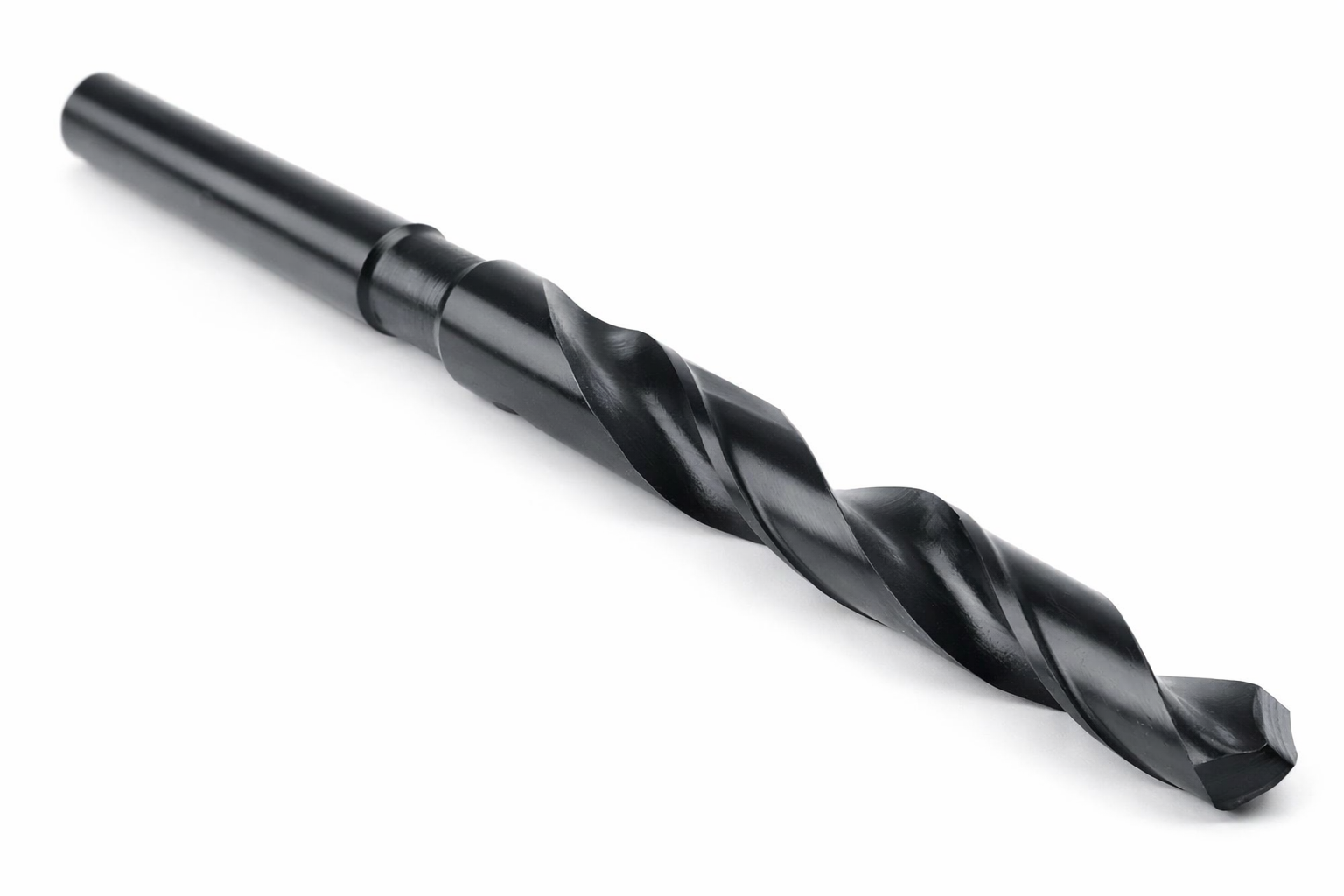
An HSS twist drill bit is therefore a spiral drill made from high-speed steel, designed to cut by rotating and feeding into the workpiece, while the helical flutes carry chips out of the hole. It is widely used because it balances cutting capability, durability, and cost in many general drilling scenarios.
The spiral body is not just a visual feature. The twist design supports three critical functions:
Chip evacuation
Drilling produces chips that must be removed quickly to prevent clogging, heat build-up, and tool breakage. Flutes create space for chips to travel upward and out of the hole.
Coolant and air flow
In many operations, lubrication or air cooling helps stabilize drilling. The flute geometry supports flow toward the cutting area and back out.
Guidance and stability
The outer edges (margins) help guide the tool in the hole, which supports roundness and consistent diameter in common drilling conditions.
Because drilling is a "closed" cutting process (chips are trapped inside a hole), flute design and surface finish can affect outcomes more than many people expect.
Choosing the right twist drill can save time, reduce waste and make routine work feel more reliable. For many workshops and production lines, the choice comes down to three familiar options: plain high-speed steel (HSS), HSS with a titanium nitride surface (HSS–TiN), and HSS alloyed with cobalt. Each brings a different balance of cost, durability and suitability for particular materials. This article compares those trade-offs so you can match the tool to the task — and to the product offering on Fangda's site.
High-speed steel remains a go-to for general purpose drilling because it combines toughness with economical pricing. HSS bits are workable across a broad range of softer and moderately hard materials, and they can be reground to restore cutting geometry, which extends their usable life in many environments. For everyday jobs such as light metalwork, woodworking and plastics, HSS delivers consistent, predictable performance without a steep upfront cost.
Applying a titanium nitride (TiN) layer alters surface behavior rather than the bulk metal. The thin ceramic film improves surface hardness and reduces friction between bit and workpiece, which typically helps chip evacuation, improves finish and delays the onset of wear. Because the coating sits on the surface, its benefits are most noticeable when drilling materials that create friction and heat at the cutting edge; however, the coating will wear off over many regrinds. For tasks that mix metal and wood or where smoother hole quality matters, TiN-coated HSS can be a practical compromise between cost and extended life.
Cobalt alloyed into a high-speed steel produces a tool whose enhanced hot-hardness allows it to resist softening at elevated temperatures. In practice, that means these bits tolerate harder alloys and prolonged runs with less loss of edge than plain HSS. They are often chosen when jobs include tougher steels or when operators prefer to run at more aggressive cutting conditions. The trade-off is that alloying can make the point more brittle and typically raises the price compared with plain HSS, so cobalt drills are most cost-effective where their extra durability is needed.
Selecting the right combination of point geometry and cutting pace is one of the simplest ways to improve hole quality and extend tool life. For users shopping Fangda's HSS twist drill offering, understanding how point angle affects chip formation, entry behavior and edge durability — and how cutting pace interacts with material and coolant — helps match a particular product to a workflow. This article explains the practical trade-offs and gives clear, non-numeric guidance you can apply on the shop floor or in light industrial settings.
The "point angle" describes how sharp or blunt the drill tip is when viewed from the side. Two common choices dominate general practice: a sharper angle that produces a pointier tip, and a flatter angle that creates a broader cutting face. A steeper (sharper) tip tends to start holes more readily and can reduce "walking" on soft materials, while a flatter tip engages more cutting lip sooner and spreads cutting forces across a larger area — a benefit when tackling harder alloys or when reducing edge wear is a priority. In short, point geometry directly influences how the bit bites, how chips form and how long the cutting edges remain serviceable.
| Feature | Practical meaning in daily work |
|---|---|
| Wide application range | Suitable for many common materials |
| Good toughness | Less likely to snap in general use |
| Easy to maintain | Often resharpened in workshops |
| Stable supply | Easy for procurement planning |
| Balanced cost | Fits both professional and general users |
Soft, nonferrous metals and most plastics: A sharper point provides clean entry and efficient cutting when the workpiece is not highly abrasive. It often produces a neater burr profile and needs less initial punch or pilot drilling.
Harder steels and abrasive alloys: A flatter point helps distribute the cutting load and resists rapid dulling. This geometry is commonly used in production where the tool must endure repeated cycles in tougher stock.
Versatile or mixed-use shops: Many workshops keep both point styles available or choose a modified tip that blends the benefits of each, depending on whether throughput, finish or regrindability is the priority.
Cutting pace — how fast the drill rotates relative to the workpiece — changes how heat builds at the cutting edge and how rapidly a tool wears. Softer materials generally tolerate higher surface speeds without overheating the cutting lip, while tougher or heat-sensitive materials demand slower rates to avoid losing edge hardness or generating poor finishes. Rather than relying on a single number, the practical approach is to begin at a moderate pace for the given material, observe chip form and surface condition, and then adjust. If chips are thin and heat is building, reduce the pace; if chips are flowing well and the edge looks sharp, modestly increasing speed can boost productivity.
There's no single "best" point angle or universal rotation speed that fits every hole. The most reliable strategy is to start conservatively, use chip form and surface finish as your guide, and match tip geometry to the material profile. With that mindset — and a small set of bits that covers sharp, flat and modified points — shops can extract consistent performance from Fangda's HSS twist range without guessing at numeric settings. If you'd like, I can draft a short checklist you can print and post at your machine bench to help operators select point style and tune cutting pace for common materials.

 4008-253-777
Industrial Zone, Furong Town, Yueqing City, Zhejiang Province, China


+86-0577-62298888
+86-0577-62299999

+86-0577-62295777
+86-0577-62297777
Copyright © Fangda Holding Co., Ltd. All Rights Reserved
Metal Drill Bit Sets Suppliers
