



Industry News
For anyone entering the world of woodworking, tools quickly become more than simple equipment. They influence accuracy, workflow, and even the way a project is planned. Among these tools, the chisel remains one of the most relied-upon hand instruments. It is used for shaping joints, trimming edges, fitting hinges, and refining surfaces where machines cannot easily reach. Because of its importance, choosing the right one requires careful thought rather than impulse purchasing.
Many beginners focus on power tools first, assuming hand tools are secondary. In practice, woodworking still depends heavily on controlled manual cutting. Machines remove material quickly, but fine joinery—such as dovetails, mortises, and small adjustments—often depends on steady hand pressure. The difference between a clean joint and a visible gap frequently comes down to how the chisel behaves in the wood.
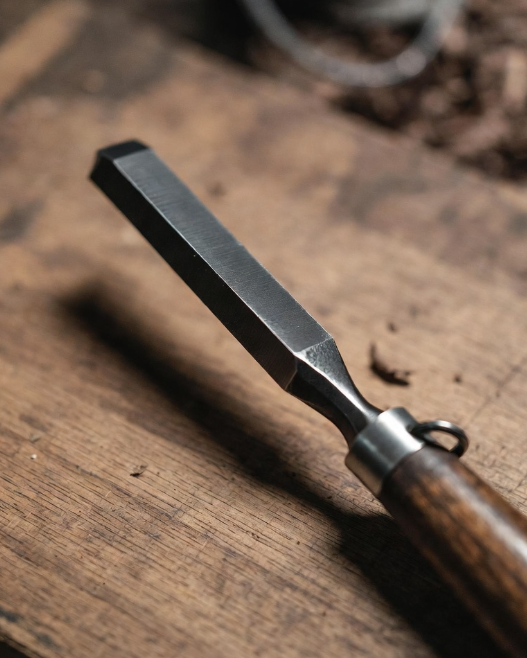
A woodworking chisel is not simply a sharp piece of metal. It is a cutting edge designed to separate wood fibers in a controlled manner. Instead of tearing material away, it slices along grain direction. This is why even a small change in angle, weight, or handle design affects the result.
There are several common types:
Each serves a different purpose, and a workshop rarely relies on only one size. A basic set typically covers narrow cuts for fine joints and wider blades for flattening or cleaning surfaces.
One of the most discussed aspects when selecting a steel chisel is the material composition. Wood fibers vary in hardness, and the edge must hold its shape long enough to remain predictable during a project. A blade that dulls quickly forces frequent sharpening, interrupting workflow. A blade that is too brittle can chip during impact.
Woodworkers usually look at two characteristics:
Heat treatment affects both. During manufacturing, the metal is hardened and then tempered to balance durability and flexibility. Even small differences in processing can influence how the tool behaves in hardwood species such as oak or maple compared with softer materials like pine.
The handle is often overlooked, yet it determines how controlled the cut feels. Woodworking involves repeated pressure from the palm or a light mallet strike. A handle that is too narrow may feel unstable, while an overly bulky one reduces control in delicate work.
Wood handles absorb vibration and feel traditional. Synthetic handles may resist moisture and shop conditions more consistently. Neither option is inherently correct; the decision depends on how the tool will be used and how long it will be held during each session.
The connection between blade and handle is also important. A secure fit helps maintain alignment and reduces wobble when paring along a marked line. A loose connection gradually affects accuracy.
Every chisel requires sharpening. Rather than being a drawback, sharpening is part of normal woodworking maintenance. The cutting edge is formed at a specific angle, commonly around a mid-range bevel suited for general work. A lower angle cuts easily but may wear faster. A higher angle withstands impact but requires more force.
Sharpening stones, honing guides, and basic technique matter more than brand. Even a well-made chisel cannot perform properly if its edge is neglected. For beginners, learning to sharpen is as important as learning to measure or mark a joint.
In an age defined by power equipment and automated cutting systems, construction sites still rely on certain hand tools. Among them, the steel chisel remains a consistent presence in masonry and structural work. Whether shaping natural stone, adjusting concrete edges, or preparing surfaces before installation, this simple tool continues to support tasks that machines cannot easily complete with precision.
Stonemasonry and construction require a balance between speed and control. Machines can remove large sections of material quickly, yet buildings often demand accurate fitting around corners, frames, and irregular surfaces. The gap between raw material and final installation is frequently bridged by manual finishing. This is where the chisel retains practical relevance.
Stone and concrete behave differently from wood or metal. Their hardness varies, and internal structure can change across a single block. Cutting tools must not only remove material but also manage fractures. If pressure is uneven, the material may crack beyond the intended line.
For masons, the goal is controlled separation rather than forceful breaking. A measured strike applied along a marked path encourages the material to follow a predictable line. This process is especially important in restoration projects, facade repair, and tile preparation, where accuracy matters as much as durability.
Concrete surfaces often require trimming after form removal. Edges can protrude slightly, and openings may need adjustment for pipe fittings or anchor points. While grinders and saws assist with larger areas, they may be impractical in tight spaces or near finished surfaces. A chisel allows small corrections without disturbing surrounding structures.
| Application Area | Typical Tasks | Blade / Tool Considerations | Practical Notes |
|---|---|---|---|
| Surface preparation | Flattening uneven stone or concrete surfaces before installation | Wider edge for surface contact, steady impact | Gradual removal improves adhesion for tiles or stone veneers |
| Mortar removal & joint cleaning | Clearing old mortar for renovation or repair | Narrow edge for precision, controlled force | Prevents damage to adjacent bricks or stones |
| Opening adjustments | Adjusting door frames, window channels, or utility penetrations | Stable handle connection, measured strikes | Controlled chiseling avoids over-removal of material |
On a typical jobsite, the tool supports multiple stages of work:
Surface preparation
Before installing tiles, stone veneers, or anchor brackets, the base surface must be flat and stable. Minor high spots are removed manually to help adhesives and fasteners seat correctly.
Mortar removal and joint cleaning
During renovation, existing mortar joints are cleared so new bonding material can be applied. A careful approach prevents damage to adjacent bricks.
Opening adjustments
Door frames, window channels, and utility penetrations often require slight resizing after measurement. Small manual corrections are safer than widening the opening with heavy machinery.
Stone shaping
Natural stone pieces rarely arrive in identical dimensions. Craftspeople refine edges so individual units fit together with minimal visible gaps.
Concrete finishing
After curing, edges may be squared or rough sections smoothed before coating or painting.
In each case, controlled impact matters more than cutting speed. The mason relies on rhythm and direction rather than brute force.
Heavy equipment has improved productivity, but it cannot fully replace hand methods. Power tools generate vibration, dust, and noise, and they require space for safe operation. In confined areas, especially indoors or near finished installations, precision becomes more important than removal rate.
Manual chiseling produces less airborne debris and allows incremental removal. Instead of removing a large section and correcting afterward, workers shape the material gradually. This reduces the risk of costly repairs.
Another factor is inspection and repair work. When maintaining older buildings, workers often encounter mixed materials—brick, stone, mortar, and patch repairs layered together. Mechanical cutting may damage surrounding areas, whereas hand control allows selective removal.
The effectiveness of a chisel depends on several design characteristics.
Blade profile
A wider cutting edge helps flatten surfaces, while a narrower edge concentrates force for splitting. Different tasks require different profiles, so workers often carry more than one size.
Material treatment
The metal must resist deformation under repeated impact. If the edge rolls over, accuracy decreases. If it becomes brittle, it may chip. Balanced heat treatment supports practical service life under construction conditions.
Handle interface
Repeated striking transfers shock from hammer to tool and then to the user's hand. A stable connection between handle and blade improves control and reduces fatigue during longer tasks.
Edge maintenance
Unlike saw blades that are replaced, chisels are maintained. Occasional sharpening restores cutting ability. A properly maintained edge requires fewer strikes and reduces unintended fractures in masonry.
Safety Practices on Site
Because masonry work involves impact, safety practices are essential. Protective eyewear helps shield against chips and dust. Gloves improve grip and reduce abrasion. Workers also check surrounding surfaces to ensure fragments do not strike nearby installations or coworkers.
Striking technique matters as well. Short, controlled blows applied at the correct angle guide fractures along a line. Excessive force can send cracks beyond the target area. Training emphasizes patience and observation rather than repeated heavy impact.
Across workshops, restoration projects, and construction environments, manual cutting tools continue to hold a steady place. Their value lies in control, adaptability, and the connection they create between worker and material. When chosen thoughtfully and maintained regularly, such a tool becomes part of routine work rather than an occasional accessory.
A reliable chisel contributes quietly to shaping, fitting, and repairing structures that people use daily. It does not replace skill, but it supports it, allowing careful hands to translate planning into tangible form.

 4008-253-777
Industrial Zone, Furong Town, Yueqing City, Zhejiang Province, China


+86-0577-62298888
+86-0577-62299999

+86-0577-62295777
+86-0577-62297777
Copyright © Fangda Holding Co., Ltd. All Rights Reserved
Metal Drill Bit Sets Suppliers
