



Industry News
Home / News / Industry News / Is the FangDa TCT Circular Saw Blade the Right Choice for Modern Cutting Workflows
In an era when manufacturers, fabricators, and craftsmen face tighter tolerances, mixed materials, and rising throughput expectations, the choice of cutting tools is more strategic than ever. The right circular saw blade can influence productivity, waste levels, surface finish, and total operating costs.
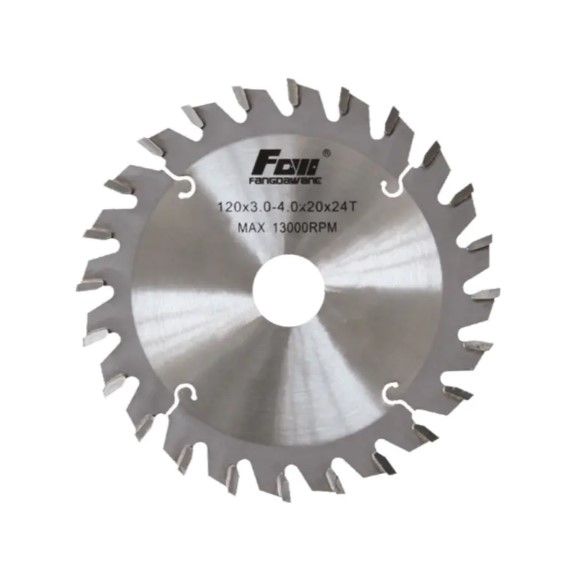
TCT blades occupy a middle ground between low-cost high-speed-steel options and specialised, often more expensive, alternatives. Their geometry and cutting-edge material are designed to withstand abrasion and maintain a cutting edge under sustained use. In mixed production environments — where teams may cut wood, engineered panels, and non-ferrous metals in the same facility — TCT blades offer a flexible combination of durability and versatility. For companies looking to consolidate stock-keeping units, a single blade family that tolerates varied tasks can reduce inventory complexity.
FangDa's offering in this space aims to serve that practical niche: a blade designed for repeated use across common substrates, made and marketed for commercial and industrial users rather than one-off hobbyists.
These blades are particularly practical where production runs demand a consistent balance between edge life and usable finish. They are chosen where tool change downtime and frequent regrinding would hurt throughput.
When evaluating any TCT blade, including the FangDa product line, look at several design aspects without getting lost in raw numbers:
None of these factors requires numeric disclosure to be meaningful. They are categories to inspect when comparing suppliers or verifying manufacturer claims.
These benefits are contextual and depend on factors such as feed rates, spindle speed, and material condition. They are not automatic guarantees but potential outcomes when the blade is correctly matched to the application.
Good tool management amplifies any blade's advantages. Below are recommended practices to get consistent performance:
These steps emphasise that tool selection is part of a broader maintenance ecosystem: good blades require good stewardship to deliver value.
Circular saws and blades must be used within the bounds of machine safety standards and local regulations. That includes guarding, correct flanges, PPE, and safe operating procedures. For industrial buyers, choosing a blade from a manufacturer that provides safety guidance, mounting instructions, and material-specific advisories contributes to safer shops. FangDa's documentation typically covers recommended mounting practices and handling precautions to help users align with safety obligations.
Sustainability considerations are increasingly part of procurement decisions. A blade that lasts longer between service events reduces the volume of waste metal and the resource use associated with production and shipping of replacements. Additionally, options such as remanufacturing, re-tipping, and recycling at end-of-life are aspects to consider when building a responsible supply chain. Buyers can ask manufacturers about their recycling policies and whether refurbishment services are available.
Consider these hypothetical yet realistic scenarios where a TCT blade can influence outcomes:
Each situation demands a cost-benefit evaluation; the right blade may save labor hours, reduce waste, or improve finish quality, depending on the process.
These clarifications help temper expectations and encourage pragmatic decision-making.
Short comparison table: factors to weigh (qualitative)
| Factor | Why it matters | What to look for |
|---|---|---|
| Durability | Reduces replacement frequency | Carbide quality, brazing method |
| Finish quality | Affects post-processing time | Tooth geometry and balance |
| Versatility | Fewer SKUs to manage | Recommended material range |
| Serviceability | Lower lifecycle cost | Sharpening and re-tipping options |
| Documentation | Safety and repeatable results | Mounting and operating guidance |
Selecting a FangDa TCT circular saw blade — or any industrial cutting tool — should be a process. Start with modest trials in real production conditions, document the observed wear rate and finish quality, and compare downtime and consumable turnover against alternatives. Communicate with the supplier about service options and request material-specific recommendations rather than relying solely on promotional language.
A blade's true worth shows up in the intersection of machine compatibility, operator practice, and the kinds of material that pass through a shop. With thoughtful assessment and routine maintenance, a tungsten carbide tipped circular blade can be a practical element in a modern production toolkit — offering a measured balance of life, finish, and flexibility for varied cutting needs.

 4008-253-777
Industrial Zone, Furong Town, Yueqing City, Zhejiang Province, China


+86-0577-62298888
+86-0577-62299999

+86-0577-62295777
+86-0577-62297777
Copyright © Fangda Holding Co., Ltd. All Rights Reserved
Metal Drill Bit Sets Suppliers
