



Industry News
Steel chisel production is a process that combines shaping, strengthening, and careful finishing into one continuous flow. While the end product looks simple, the path from raw metal to a usable tool involves several connected stages. Each stage influences how the chisel performs when it meets hard surfaces in construction, woodworking, metalworking, or repair work.
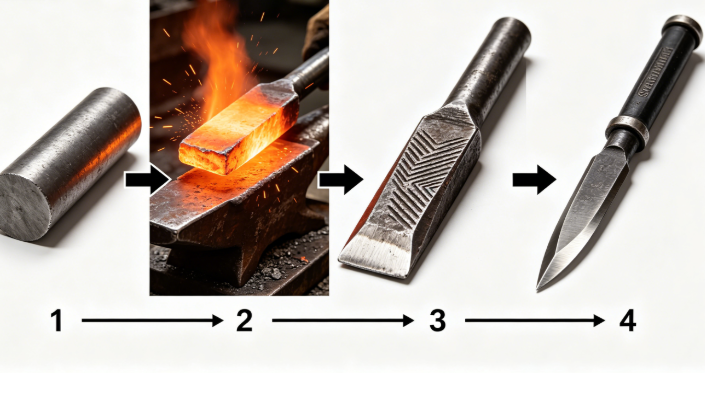
The Steel Chisel Factory approach is not about speed alone. It is more about controlled shaping and consistent handling of materials so the final tool can hold its form under repeated impact. The steps below describe how steel chisels are typically made in modern production environments, written in a way that focuses on real-world practice rather than technical complexity.
Before any shaping starts, the process begins with planning how the chisel should function. Different chisels serve different purposes. Some are designed for cutting stone-like materials, others for metal shaping or general repair work. This early stage is about matching the intended use with the structure of the tool.
Material selection comes next. Steel used for chisels is usually chosen for its balance between strength and flexibility. If the material is too hard, it may become brittle. If it is too soft, it may wear down too quickly. The balance is carefully considered so the tool can handle repeated impact without losing shape.
At this point, the raw material is usually in bar or rod form. It is inspected for consistency. Even small variations in material quality can affect the final result, so attention is given before the manufacturing cycle begins.
A simple breakdown of this early phase:
| Stage | Description | Purpose |
|---|---|---|
| Planning | Defines tool use and shape direction | Ensures proper design intention |
| Material selection | Chooses suitable steel form | Balances strength and flexibility |
| Inspection | Checks raw material condition | Avoids inconsistencies later |
This stage does not involve visible shaping yet, but it lays the foundation for everything that follows. Without this preparation, later steps would lose stability in output.
Once materials are ready, the steel moves into preparation for forming. This stage focuses on making the metal workable. Steel in its raw form is rigid, so it needs to be brought into a condition where shaping becomes possible.
Heating is commonly used to soften the material. The goal is not to melt it, but to make it flexible enough for shaping tools to work on it. The temperature is controlled carefully so the metal responds evenly. Uneven heating can lead to irregular shaping, which affects the final tool balance.
After reaching a workable condition, the metal is cut into sections. Each section becomes the base for one chisel. The size of each piece is determined by the intended design of the tool.
During this stage, operators often observe the color and texture of the metal. These visual cues help indicate whether the material is ready for shaping. Although simple, this visual judgment plays an important role in maintaining consistency.
The preparation stage is also where the basic form direction is decided. Some chisels require longer bodies, while others need compact structures for controlled force application. These decisions influence how the next shaping phase unfolds.
Shaping is where the chisel begins to take form. The heated metal is gradually pressed, struck, or molded into a rough tool shape. This stage is usually repeated in controlled cycles rather than completed in one step.
The metal is guided into a basic structure with one end forming the working edge and the other forming the striking end. Between these two areas lies the body, which must remain stable and balanced.
During shaping, the metal is not forced into final form immediately. Instead, it is adjusted gradually. This helps reduce internal stress and improves structural stability.
The forming stage is often described in simple steps:
Each step builds on the previous one. Even small deviations are corrected early, since they become harder to adjust later.
A chisel in this stage still looks unfinished. The edges are not sharp, and the surface may appear rough. However, the internal structure is already taking shape, which is more important than appearance at this point.
After shaping, the chisel undergoes controlled heating and cooling cycles. This part of the process adjusts how the steel behaves under pressure. It is not about changing appearance but about improving internal structure stability.
The tool is heated again, then cooled in a controlled way. This allows the internal structure of the steel to adjust gradually. If cooling happens too quickly, the material may become too rigid. If it is too slow, it may lose its intended strength balance.
Different parts of the chisel may respond differently during this stage. The working edge requires a harder surface, while the body needs a level of flexibility to absorb impact. This balance is achieved through controlled thermal handling.
Although this step is often seen as technical, it can be understood simply as a way of stabilizing the tool after shaping. The goal is to ensure that repeated striking does not deform the structure.
At this stage, the chisel begins to show its functional character. It is no longer just a shaped metal piece but a tool with defined mechanical behavior.
Once structural formation is complete, attention shifts to the surface. The chisel is cleaned and refined to remove rough layers created during earlier stages. Surface finishing is not only about appearance but also about usability.
Rough surfaces can affect handling and performance. They may cause uneven wear or reduce control during use. Finishing helps create a smoother outer layer that supports better grip and stability.
This stage may include:
The surface is also prepared for long-term resistance against environmental exposure. While the chisel is a functional tool, its surface condition influences how long it remains usable in different working environments.
At this point, the tool begins to look complete, although further refinement is still required at the edge level.
The working edge is one of the most important parts of a steel chisel. This stage focuses entirely on shaping that edge into a usable form. It is carefully controlled so that the edge is neither too sharp to damage quickly nor too blunt to function effectively.
The edge is shaped gradually through repeated refinement. Each adjustment removes small amounts of material until the desired form is achieved. This controlled approach helps maintain consistency and prevents uneven wear patterns later.
During this stage, the tool is also tested visually and manually. The edge alignment is checked to ensure it matches the body direction. Even slight misalignment can affect performance during use.
The sharpening process also influences how the chisel interacts with different materials. A well-formed edge allows smoother penetration and reduces unnecessary resistance during impact work.
Quality observation happens throughout the entire process, not only at the end. At each stage, the tool is checked for structural balance, surface condition, and alignment.
Rather than relying on a single inspection point, monitoring is continuous. This helps identify small variations early before they become larger issues.
Key observation points include:
Workers often rely on visual inspection combined with handling tests. The goal is to ensure the chisel feels stable and behaves consistently across its structure.
Quality observation is less about numbers and more about consistency in feel and form. Even small differences can affect how the tool performs under repeated use.
After finishing and inspection, the chisel moves into its final preparation stage. This involves cleaning, arranging, and preparing the tool for distribution.
The surface is cleaned again to remove any remaining residues from earlier steps. Then the tool is grouped based on its intended type or use category. This helps ensure it reaches the correct application environment.
Packaging focuses on protection during transport and storage. The aim is to prevent surface damage and maintain structural integrity until the tool is used.
At this point, the chisel has completed its transformation from raw steel to a functional tool. Each stage has contributed to its structure, from shaping and strengthening to finishing and final inspection.
The process reflects a steady progression rather than a single transformation moment, where each step influences the next in a continuous production flow.
 4008-253-777
Industrial Zone, Furong Town, Yueqing City, Zhejiang Province, China


+86-0577-62298888
+86-0577-62299999

+86-0577-62295777
+86-0577-62297777
Copyright © Fangda Holding Co., Ltd. All Rights Reserved
Metal Drill Bit Sets Suppliers
