



Industry News
In many woodworking spaces, the circular wood cutting blade is one of those tools that quietly does a lot of work. It does not look complicated. A round steel disc with teeth. But once it starts spinning, it becomes something very practical for shaping and dividing wood in daily tasks.
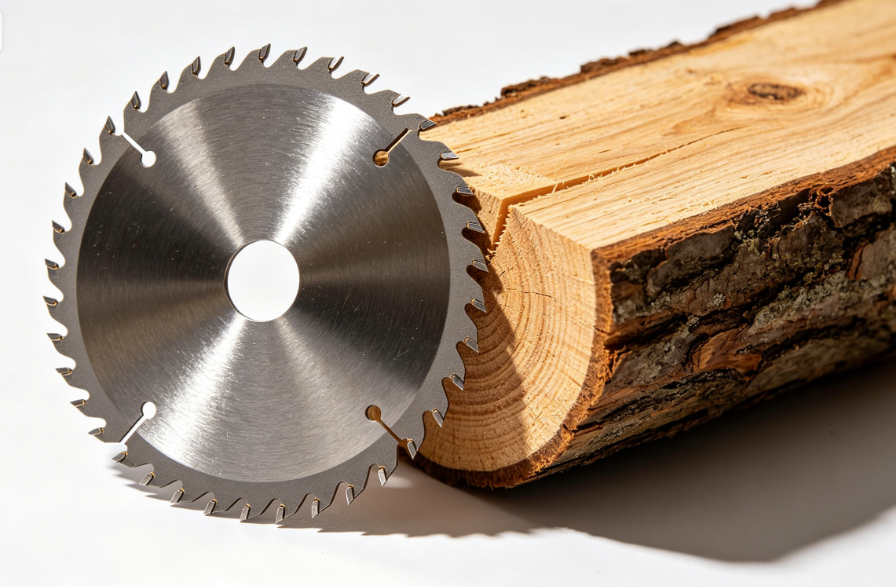
You will find it in workshops, small production rooms, and construction sites. Anywhere wood needs to be cut into usable pieces, this blade usually shows up in some form.
The idea behind it is straightforward. Rotation replaces hand pressure. Instead of pushing a knife or saw back and forth, the blade keeps moving in a circle and does the cutting continuously.
A lot of it comes down to consistency. When the blade is spinning steadily, the cut feels more controlled compared to manual methods.
Another reason is that it handles repetition well. Cutting one board is simple. Cutting dozens of similar pieces is where this tool becomes more useful.
In daily work, it is often chosen because:
It is not about being advanced. It is more about being practical and predictable.
The circular wood cutting blade is not limited to one job. It shows up in many small but important cutting tasks.
For example:
cleaning up uneven edges after rough cutting
None of these tasks are complicated on their own, but they need steady control. That is where the rotating motion helps.
Yes, and you can usually feel it immediately when switching materials.
Soft wood tends to cut smoothly with less resistance. The blade moves through it almost effortlessly. Harder or denser wood feels different. The cut slows down slightly, and the operator usually needs to guide it more carefully.
What affects this behavior:
Even without changing settings, the material itself changes the experience quite a bit.
You do not need a large industrial setup to see this tool in use. It appears in many different environments.
Some typical places include:
In all these places, the goal is similar: turning raw wood into manageable pieces without too much effort.
Wood can be cut in different ways, but circular motion offers a distinct approach. Instead of back-and-forth movement, the blade rotates continuously.
This creates several noticeable differences:
A simple comparison helps clarify this:
| Cutting Style | General Behavior |
|---|---|
| Manual cutting | Slower, repetitive motion |
| Straight blade use | Linear and controlled |
| Circular blade use | Continuous rotating action |
Each method has its own use case, but circular motion is often chosen when steady output is needed.
Even though it looks like a simple circle, the details matter more than expected.
Small differences affect how it behaves:
A tighter tooth pattern tends to leave smoother edges. A more open pattern usually clears material faster but feels rougher.
The choice depends on the task, not just the tool itself.
Over time, the blade does not stay exactly the same. The edge slowly loses sharpness, and the cutting experience changes a bit.
This does not happen suddenly. It builds gradually.
Some signs people notice:
Most of the time, this is normal wear rather than sudden damage.
There is no fixed timing. It depends on how often it is used and what kind of material it cuts.
People usually start paying attention when:
Sometimes maintenance is enough. Other times, replacement becomes more practical.
This part is often underestimated. A spinning blade does not forgive careless movement.
Basic habits usually include:
Most accidents happen not because of the tool itself, but because of rushed handling.
Modern woodworking often combines manual skill with powered tools. The circular wood cutting blade fits naturally into this mix because it supports repeated, controlled cutting.
It is commonly used for:
Even with newer tools available, this blade type continues to appear in many environments because it remains practical and easy to integrate into existing setups.
Before starting, people usually check a few simple things:
Nothing complicated. Just basic preparation that helps the process stay smooth.
The circular wood cutting blade continues to be used widely because it solves a basic need in a straightforward way. It turns rotation into a controlled cutting path without requiring complicated adjustments.
Its value lies in consistency. It works across different environments, handles various wood types, and supports repeated tasks without major changes in operation.
In many workshops, it is not treated as a specialized tool. It is simply part of daily work, used whenever wood needs to be shaped, divided, or prepared for the next step.

 4008-253-777
Industrial Zone, Furong Town, Yueqing City, Zhejiang Province, China


+86-0577-62298888
+86-0577-62299999

+86-0577-62295777
+86-0577-62297777
Copyright © Fangda Holding Co., Ltd. All Rights Reserved
Metal Drill Bit Sets Suppliers
