



Industry News
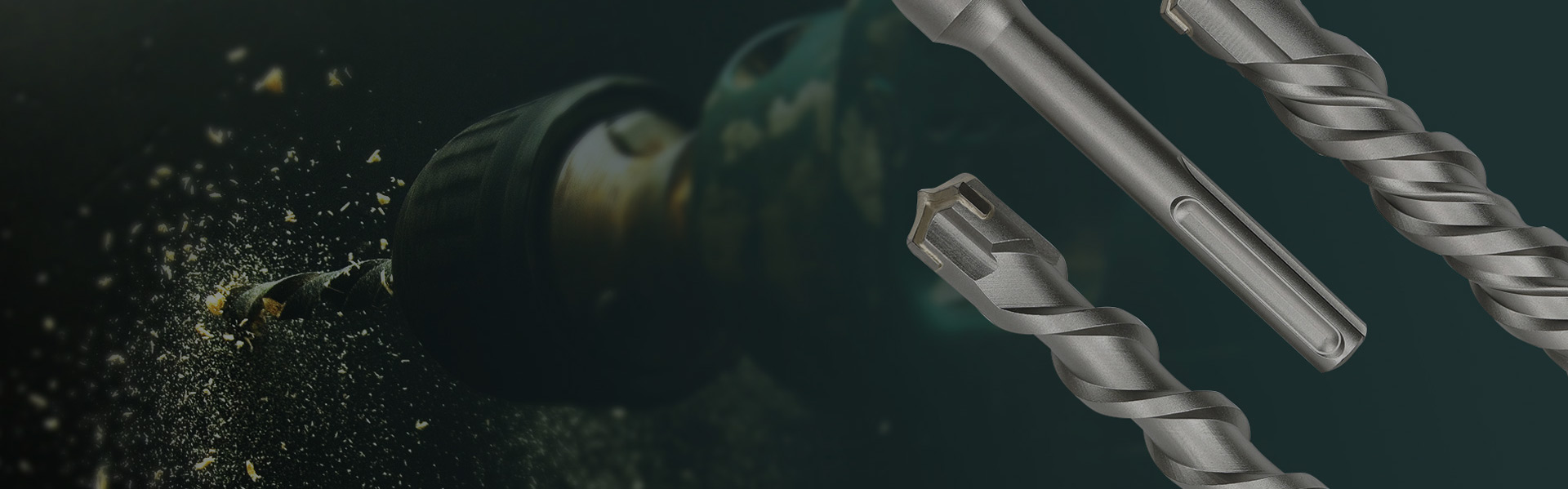
A reliable drill tool is a fundamental part of many workshop tasks and home projects.
High-speed steel, often used for general purpose cutting tools, is an alloy engineered to retain useful hardness at elevated temperatures that occur during cutting. This combination of hardness and toughness allows the cutting edges to resist wear while maintaining enough flexibility to avoid sudden failure under normal use.
The twist design is named for the spiral grooves that run along the length of the tool. These spirals, called flutes, serve several practical purposes: they provide cutting lips that remove material, they create channels to evacuate chips away from the hole, and they help guide cutting fluids if those are used. The cutting point at the tip is formed by the meeting of two lips; its shape and angle affect how the bit initially engages the work surface and how it centers without wandering. The central portion of the tool, known as the web, contributes to overall strength and resists bending under load. The shank is the part held by a drill chuck or collet and may have different styles depending on the toolholder used. Together these elements form a compact geometry that balances cutting action, clearance for chips, and structural resilience.
| Drill Part | Description | Function |
|---|---|---|
| Cutting Lips | Two sharp edges located at the tip | Remove material and create the hole |
| Flutes | Spiral grooves running along the body | Remove chips and allow coolant flow |
| Web | Central core of the drill body | Provides structural strength |
| Point | The angled tip of the drill | Helps the tool start drilling accurately |
Several geometric features determine the behavior of a twist drill during use. The helix shape of the flutes influences how aggressively the cutting edges remove material and how efficiently chips are transported away. A shallower spiral can provide more support behind the cutting lips, while a steeper spiral tends to clear chips more quickly. The tip profile governs how well the bit centers and how much force is needed to start a hole. The balance between web thickness and flute depth affects stiffness versus cutting capacity. Engineers and tool designers consider these factors when specifying a bit for a given material family or drilling condition. For a beginner, recognizing that geometry matters will help when reading product descriptions and matching a tool to a task.
This drill style is commonly used across several material categories. For relatively soft and fibrous materials such as wood, the bit typically creates clean holes with reasonable feed rates and minimal need for cooling. For many metals, the alloy and finish of the bit, alongside the use of cutting fluid and appropriate speed, determine hole quality and tool life. Plastics present a different challenge: they can melt or chip depending on heat buildup and feed technique, so a controlled approach is often needed to avoid surface damage. While some bits are sold as multipurpose, selecting a tool matched to the work material generally improves results.
When a project calls for reliable holemaking in metal, the choice of tool matters for workmanship, workflow, and operating cost.
The core material behind many conventional metal cutting tools is an alloy designed to balance hardness with toughness at elevated temperatures. That balance is important because drilling generates heat at the cutting edges, and a material that retains adequate hardness under thermal load maintains edge geometry for longer. The way an alloy is formulated, and the heat treatment it receives, affects properties such as wear resistance and fracture toughness. Suppliers that describe their metallurgy and processing tend to give users useful signals about the conditions under which a tool will perform consistently.
Holemaking often concentrates heat at the tip and cutting lips, which can change cutting behavior if the tool softens. Tools intended for metalworking typically combine an appropriate alloy with geometric features and surface finishes that reduce friction and help manage temperature. The spiral profile of the flutes is shaped to evacuate chips efficiently so that they do not remain in contact with the cutting zone and raise the local temperature. Where needed, certain surface treatments can lower friction and delay the onset of thermal wear. Taken together, these design choices reduce the need for aggressive cooling and can contribute to steadier cutting conditions over extended runs.
Efficient material removal depends as much on geometry as on raw material. The helix angle, point configuration, and web thickness are all part of a coordinated design that determines cutting forces, chip form, and guidance into the workpiece. A geometry that supports controlled chip formation reduces the risk of built-up edge and improves dimensional consistency. For operators, this translates into fewer interruptions caused by chip jamming, less chance of wandering at the hole start, and smoother progress when drilling through stacked or variable-thickness components.
A practical measure of value for a cutting tool is the length of time it can be used before edge condition degrades to the point of affecting hole quality. Durability is influenced by alloy selection, heat treatment, geometry, and finishing operations. Tools built with attention to those factors tend to show gradual and predictable wear patterns rather than sudden failure. Predictability matters in production settings because it makes planning for regrinding, replacement, and inventory simpler, and it reduces the risk of unexpected downtime in a process chain.
From a buyer's perspective, consistency between batches is as important as single-sample performance. Rigorous manufacturing controls produce parts whose dimensions, heat treatment, and surface condition match specification. This consistency ensures that users can establish reliable machining parameters for a given tool type and expect similar outcomes across multiple deliveries. Clear product descriptions that include recommended application families and handling guidance allow technicians to set appropriate speeds, feeds, and cooling practices without speculative guesswork.
Choosing the appropriate cutting tool for a given drilling job begins with understanding how material and design interact under load and heat.
The fundamental distinction between the two options centers on alloy composition and the way each alloy responds to heat at the cutting edge. One family is made from a high speed steel formulation that balances hardness and toughness through a heat treatment process. The other builds on a steel base with a higher proportion of a hardening element added to the matrix. That additional element increases resistance to softening at elevated temperature, so that the cutting edge maintains geometry longer under thermal stress. These compositional differences translate into distinct machining behaviors that matter when selecting a tool for a specific workpiece material.
Beyond chemical makeup, the way the tool is produced matters. Heat treatment, grinding accuracy, and surface finishing influence wear patterns and fracture resistance. A tool that retains its hardness without becoming brittle under repeated heating and cooling cycles will often show steady, predictable wear rather than sudden breakage. In many production settings, predictability is more valuable than any single measure of toughness because it allows technicians to plan maintenance and control inventory.
When considering expected life, think in terms of how the tool wears in real conditions rather than abstract labels. The family with added hardening element tends to resist thermal softening, which is beneficial in sustained high temperature cutting. However, that same increase in hardness can make the material less forgiving under impact or sideways loading. The high speed steel variety offers a balance that often accepts regrinding and returns to service comfortably, which can be attractive where resharpening is part of a normal maintenance routine. Practical service life depends on matching the tool to the task, using appropriate cutting conditions, and following routine handling and sharpening practices.
Different workpiece materials call for different approaches. For machining softer or more ductile metals and many nonmetal materials, a standard high speed steel style performs consistently with moderate feeds and conventional cooling. For harder or heat-sensitive alloys, the formulation with extra hardening element may perform with less frequent edge degradation when cutting generates sustained heat. In applications that combine stacked plates, coated surfaces, or interrupted cuts, consider how chip control and edge strength interact with the workpiece: controlled chip evacuation and a robust cutting geometry reduce the chance of clogging and edge damage.
Geometry plays a key role regardless of alloy. Point angle, helix shape, web thickness, and flute depth determine how the tool enters the material, how chips are formed, and how heat is carried away. A geometry that matches the material family will produce better hole quality and reduce tool stress. Manufacturers typically provide descriptions of geometry and recommended application families; these notes are helpful when setting up machining parameters or when choosing a tool for a mixed job shop.
For someone beginning to build a toolkit, understanding the material basis, geometry, and application range of a twist style drill offers a strong foundation. Rather than chasing absolute claims, aim to match tool features to the work at hand, adopt care practices that limit avoidable wear, and learn through hands-on practice with varied materials. With deliberate selection and routine maintenance, this category of drill provides a reliable option across many common drilling needs.
 4008-253-777
Industrial Zone, Furong Town, Yueqing City, Zhejiang Province, China


+86-0577-62298888
+86-0577-62299999

+86-0577-62295777
+86-0577-62297777
Copyright © Fangda Holding Co., Ltd. All Rights Reserved
Metal Drill Bit Sets Suppliers
