



Industry News
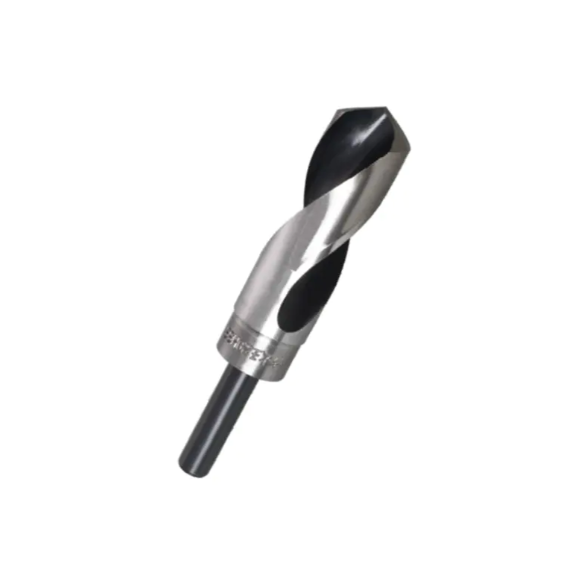
In a market crowded with cutting tools and power-tool accessories, choosing the right drill bit can be more consequential than it first appears. For manufacturers, workshop technicians, and hobbyists alike, the selection affects productivity, surface finish, tool life, and ultimately operational cost. This piece explores why many professionals consider the Fangda-tools HSS Twist Drill Bit a sensible option, examines the characteristics that shape its performance, and outlines practical considerations for integrating these cutting tools into everyday workflows — all without relying on technical specifications.
Drill bits are sometimes treated as commodity items, yet their performance affects cycle time, tool change frequency, part quality, and even safety. Small gains in consistency reduce rework and downtime. For companies managing tight margins and high throughput, selecting a drill bit that matches application needs and material mix can add measurable value. Recent procurement trends show a move toward suppliers that combine predictable delivery, transparent manufacturing practices, and traceable quality checks. Fangda-tools has positioned its HSS twist drill offering toward those practical concerns rather than making broad, unverified claims.
Demand for small-batch flexibility, precise hole-making, and predictable tool behaviour has grown across industries that rely on metalworking, woodworking, and composite fabrication. As production environments diversify, end users seek drill solutions that balance durability with consistent results. Manufacturers responding to that demand focus on material selection, geometry design, and process control. A quality high-speed steel spiral drill is designed to navigate those needs by offering dependable cutting action across a range of substrates, and here is where Fangda-tools positions its offering: attention to material consistency, manufacturing practices, and user-focused design choices.
Not all twist drills are the same. A dependable drill exhibits even cutting forces, predictable chip evacuation, and a stable cutting edge over many cycles. These outcomes stem from a combination of metallurgy, edge preparation, and flute geometry. In practice, that translates to fewer broken tools, smoother holes, and reduced rework. The Fangda-tools HSS Twist Drill Bit emphasizes these aspects through refined production controls and finishing methods intended to produce a reliable tool across multiple batches.
The raw metal used to form cutting tools plays a major role in their behaviour. A coherent microstructure helps resist premature wear and cracking when the tool meets varying workpiece conditions. Instead of relying on a single defining attribute, reputable manufacturers ensure that the steel they use delivers an even balance of hardness and toughness after heat treatment. For the end user, that means the bit will retain a useful edge without becoming brittle — an important balance when working with mixed materials or interrupted cuts.
Flute shape, helix angle, and chisel edge preparation all influence drilling outcomes. Properly optimized flute geometry promotes efficient chip removal, reducing heat build-up and the risk of clogging. At the same time, tip design and secondary cutting edges affect the initial bite and steering during entry. Products in this category often aim to deliver a geometry that performs well in general-purpose applications, allowing the same tool to be applied in metal fabrication, construction, and maintenance tasks with predictable results.
Surface finish and edge conditioning can significantly extend the useful life of a twist drill. A smooth flute surface reduces friction and eases chip flow, while precise edge honing prevents premature chipping. Manufacturers with thorough quality practices will inspect each batch for edge consistency and remove defects that cause erratic cutting behaviour. For workplaces where downtime is costly, these finishing steps translate to fewer interruptions and more slices of productive time.
One of the main strengths of a well-made high-speed steel spiral drill is its adaptability. From mild steels to certain non-ferrous alloys, and in many workshop scenarios, such a tool can serve multiple roles: pilot drilling, general-purpose holemaking, and repair work. The flexibility reduces the need to swap inserts or specialized tools for every minor variation in material, streamlining tool management and inventory.
Practical benefits become especially clear in fast-paced settings. Operators appreciate tools that do not require intricate setup or constant adjustment to achieve satisfactory holes. The right combination of geometry and finish reduces chatter, improves centering, and produces cleaner hole walls. Over time, these gains accumulate into lower scrap rates and less time spent on corrective machining.
A reputation for reliability rests on consistent manufacturing. Rigorous inspection procedures and traceability measures ensure that each drill leaving the factory meets internal quality standards. For purchasers, this reduces the surprises that can come with inconsistent tool performance. When a supplier documents production steps and inspection outcomes, it becomes easier to maintain quality across multiple procurement runs.
Modern production environments demand that consumables meet certain safety and regulatory expectations. That includes control over contaminants, adherence to handling guidelines, and clear information on safe use. Suppliers who align with industry expectations make it simpler for workplaces to train staff, document procedures, and maintain compliance during audits. The right drill is not only a cutter; it is also a consumable that integrates cleanly into occupational safety practices.
| Consideration | HSS twist (general-purpose) | Specialized coated or carbide option |
| Versatility | Suitable for a broad material mix | Better for specific high-wear conditions |
| Regrindability | Maintains geometry after regrind | May be limited or not economical to regrind |
| Cost profile | Balanced initial cost and service life | Higher initial cost, variable life benefits |
| Ease of sourcing | Widely available in various configurations | May require longer lead times |
| Typical users | General shops, maintenance, fabrication | High-volume production, special alloys |
Sustainability is an increasingly important factor for procurement decisions. Tools that are produced with energy-efficient processes, responsible material sourcing, and a focus on longevity reduce the overall environmental footprint of an operation. Extending tool life through good material choices and finishing techniques is a small but meaningful contribution to resource efficiency, because it lowers the rate of replacement and reduces waste.
Access to reliable supply and responsive after-sales support can be as important as the initial product features. When a supplier offers consistent stock levels, clear ordering channels, and helpful technical guidance, purchasing teams can plan with confidence. In practice, that means fewer production hiccups due to delayed deliveries and better outcomes when a specialized recommendation is needed for a particular application.
Selecting an appropriate spiral drill for daily use should be guided by practical criteria rather than marketing claims. Consider the following points when integrating a new line of cutting tools into your toolkit:
These operational steps help realize the potential benefits of a sound cutting tool investment, whether for a small repair shop or a mid-sized fabrication line.
The benefits of consistent twist-drill performance are visible in many settings. Maintenance teams executing repetitive holemaking tasks will see fewer tool breakages and smoother cycles. Prototype shops benefit from a predictable tool response that reduces the need for iterative adjustments. Construction crews gain time savings when a single, reliable tool can be used across different substrates during on-site work. In each scenario, the combination of steady edge retention, reliable chip control, and clear manufacturing standards supports better outcomes.
To summarize, a well-made high-speed steel spiral drill can be a pragmatic choice for many workshops. By placing emphasis on consistent raw materials, thoughtful geometry, robust finishing, and dependable supply practices, tools in this class offer a straightforward path to dependable holemaking. When assessed through the lens of everyday operations — where predictability and low upkeep matter — the decision to select a particular product becomes clearer: prioritize craftsmanship in manufacturing, responsiveness from the supplier, and a configuration that aligns with your practical needs.

 4008-253-777
Industrial Zone, Furong Town, Yueqing City, Zhejiang Province, China


+86-0577-62298888
+86-0577-62299999

+86-0577-62295777
+86-0577-62297777
Copyright © Fangda Holding Co., Ltd. All Rights Reserved
Metal Drill Bit Sets Suppliers
