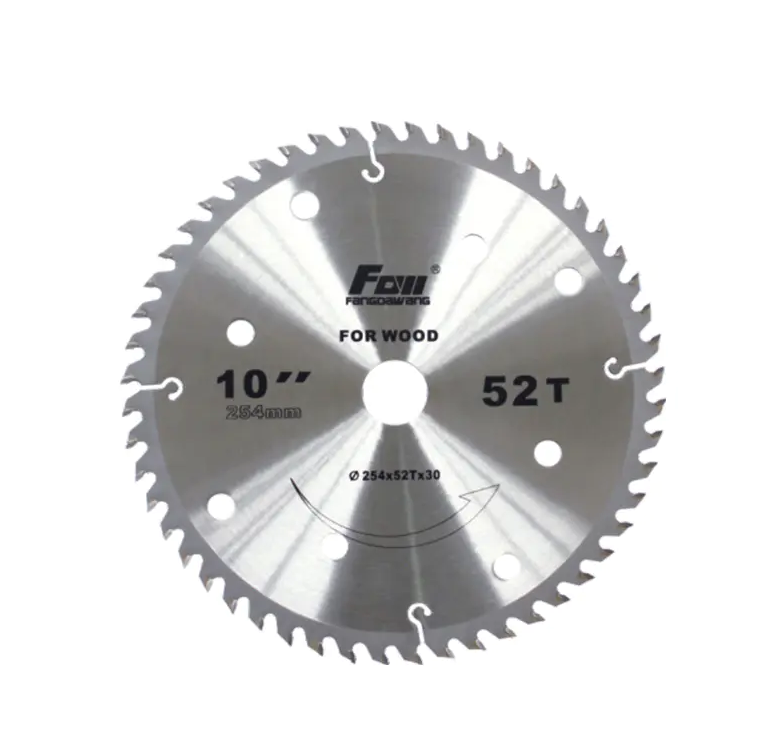
In an industry defined by tight tolerances, fast turnaround, and steady production cycles, the tools that sit in machine spindles or on mounted arbors quietly determine whether a job finishes on time and within budget. One type of cutter that has drawn steady attention from manufacturers, joiners, and metalworkers is the tungsten carbide tipped circular saw blade. On the Fangda-tools website, a series of these cutters has been presented as part of a broader tool strategy aimed at balancing productivity, lifecycle economics, and cutting quality.
Market context: what shops need now
Global production environments are under mounting pressure to do more with less. Plants that previously could tolerate downtime for tool changes now operate leaner, while small workshops face high customer expectations for finish and delivery. Several trends shape tool choice:
- Materials mix is more varied, from engineered woods and coated panels to high-alloy metals and composite laminates.
- Cutting operations increasingly emphasize consistency, not just peak performance.
- Sustainability and cost-per-part are rising KPIs for procurement and operations teams.
Given these pressures, a cutter that delivers predictable dimensions, holds an edge for many cycles, and can be dressed or indexed when needed becomes attractive. Fangda-tools’ tungsten carbide tipped circular saw offerings aim to meet this mix of operational and economic needs.
What the product line emphasizes (without specific numbers)
Instead of selling on a single headline metric, the product descriptions and industry discussions around these saws often highlight a combination of design elements and manufacturing choices that contribute to real-world utility:
- Precision manufacturing of the steel core for stable rotation and minimal runout.
- Carefully selected carbide grades at the tooth tip designed to balance wear resistance with fracture toughness.
- Tooth geometry optimized for material transfer, chip evacuation, and surface quality in common fabrication tasks.
- Quality control and batch testing to reduce variability between units.
These factors shape how reliably a cutter behaves in different setups, including table saws, miter stations, and circular saw lines used in cabinet, millwork, and light fabrication shops.
Reasons procurement teams cite when selecting these cutters
Below are practical selection drivers that often appear in buyer conversations. These are framed as operational needs rather than claims.
- Consistent cut quality across runs. Repeatable edge finish and dimensional adherence reduce downstream sanding or rework. A cutter that limits tear-out and burring on the first pass saves labor over time.
- Predictable wear characteristics. When a tool’s life cycle follows a known pattern, scheduling preventative maintenance and inventory becomes simpler. Unexpected tool failure is more disruptive than predictable gradual dulling.
- Compatibility with existing workflows. Teams prefer cutters that fit their current machines and changing processes with minimal retrofitting. Ease of mounting, simple balancing, and compatibility with standard fixtures matter.
- Simplified procurement and support. Access to consistent supply, clear ordering codes, and responsive replacement policies reduce risk for production planners.
- Balance of upfront cost and operating expense. Buyers consider the whole life cycle: tool price, number of parts per cutter, downtime for changes, and effect on finishing operations.
Operational advantages framed for shop floors
Here are practical benefits that tend to show up in daily operations when a cutter aligns well with the application:
- Reduced secondary finishing. When cuts come off the line with cleaner edges, secondary processes like sanding or fettling require less operator time.
- Stable production throughput. Fewer unexpected stoppages for tool swaps helps maintain schedule reliability.
- Flexibility across materials. A well-engineered tooth profile can handle a range of panel, board, and non-ferrous tasks with acceptable performance, which is valuable for shops that must switch jobs frequently.
- Lower scrap rates. Predictable dimensional output reduces rework and wasted material, improving yield on each panel or part.
These outcomes matter in real terms: less labor chasing problems, more consistent customer shipments, and improved utilization of machinery.
Choosing the right cutter: a practical checklist
Selecting a circular cutter for your shop does not require a deep dive into datasheets when you focus on operational fit. Consider these pragmatic checkpoints:
- Match the tool to the machine. Confirm that the arbor, bore, and mounting system are compatible with the saw in question.
- Assess the common workpieces. Evaluate the materials most often machined and whether a single cutter can service multiple jobs or if a small, curated set is preferable.
- Think about serviceability. Can teeth be replaced or indexed? Is the manufacturer or supplier able to support timely replacements?
- Plan for inventory and rotation. Tools are easier to manage when you run a rotation system and maintain a small buffer to avoid emergency orders.
- Trial under production conditions. A controlled trial on typical parts reveals finish quality, cycle life, and any changes needed for feed or speed settings without disrupting the entire schedule.
This checklist helps avoid overspecification while ensuring the cutter performs where it matters most: on the production floor.
Maintenance and care: extracting consistent value
Proper maintenance amplifies the utility of any cutting tool. Here are shop-tested habits that prolong effective service life and protect part quality:
- Regular inspection. Visual checks for chipped tips, unusual wear, or imbalance help catch issues early.
- Routine cleaning. Removing pitch, resin, or built-up debris prevents heat retention and improves cutting action, especially on wood and composite materials.
- Rotation protocols. Establish a consistent rotation for cutters used daily to even out wear and keep a predictable replacement schedule.
- Record keeping. Track run hours and production volumes per tool. Even a modest log helps correlate process changes with tool performance over time.
These steps create transparency around tool performance and reduce the “it failed unexpectedly” problem that strains operations.
Sustainability, recycling, and lifecycle thinking
Materials and waste management are becoming central in procurement conversations. In the case of tipped saw cutters, lifecycle thinking includes:
- Recycling carbide. The carbide material in tips has value and may be collected and returned through recycling streams that recover hard metals.
- Refurbishment pathways. Some operations explore tip replacement or re-tipping services when core integrity allows it, extending overall tool life.
- Optimized cutting strategies. Reducing feed overloads and avoiding abusive conditions prolong tool life and reduce consumption.
These approaches align with broader corporate sustainability goals while also improving cost efficiency.
Use cases: where these cutters typically deliver value
Different shop profiles show how a single family of cutters can fit varied needs:
- Cabinet and furniture workshops. For panel processing and crosscutting tasks, a cutter that minimizes tear-out reduces sanding work and improves finish consistency.
- Laminate and surface finishing lines. High-quality edge results on laminates and composite panels shorten post-cut processing times.
- Metal fabrication (non-ferrous). When machining softer metals, a carefully chosen tooth geometry maintains dimensional control without generating excessive heat.
- Multipurpose production shops. Facilities that shift rapidly between job types benefit from cutters that tolerate a range of substrates without constant tool changes.
These examples are illustrative and help purchasing teams align choice with expected production mixes.
How to evaluate supplier claims responsibly
Marketing materials often highlight performance features. To translate those claims into procurement confidence, follow a testing and verification approach:
- Request reference samples. Trial on representative parts under normal cycle conditions.
- Compare side-by-side. Use a control cutter from your current inventory to benchmark differences in finish and lifetime.
- Measure outcomes that matter. Track rework rates, throughput, and scrap during the trial period.
- Engage operators. Their feedback on handling, changeover complexity, and cut feel is crucial and often overlooked by purely technical assessments.
This empirical approach keeps decisions grounded in shop reality rather than promise.
Risk management and warranty considerations
When integrating any new supplier or product family, clarify these contractual and logistical points:
- Return policies for defective units. Rapid replacement reduces production exposure.
- Batch traceability. Knowing which production lot a cutter came from helps diagnose quality anomalies.
- After-sales support. Access to technical advice or local distributors eases troubleshooting.
Addressing these issues early prevents small problems from escalating into lost production time.
A simple comparative snapshot
The table below offers a high-level perspective on how a tungsten carbide tipped circular saw family is positioned against common shop priorities. It is not a specification sheet; it is a decision aid that highlights which operational factors tend to align well with this class of cutter.
| Priority Area |
Typical Strengths |
Decision Tip |
| Edge finish |
Good repeatability for many panels |
Trial on actual parts |
| Tool life predictability |
Consistent wear patterns under planned use |
Track run hours |
| Versatility |
Handles multiple substrates with right tooth profile |
Maintain a small cutter set |
| Maintenance |
Straightforward cleaning and inspection |
Implement rotation logs |
| Cost control |
Lifecycle view reduces per-part expense |
Compare total cost per part, not just purchase price |
Fit over hype
Choosing cutting tools is an exercise in aligning operational realities with manufacturing tools. Fangda-tools’ tungsten carbide tipped circular saw offering presents a practical option for teams seeking predictable cutting performance, manageable maintenance routines, and clearer lifecycle economics. Rather than focusing on headline slogans, the most effective approach is evidence-based: trial the cutter on real workpieces, measure the outcomes that matter to your workflow, and integrate the tool into a disciplined maintenance and rotation schedule.
For procurement professionals and shop managers, the key questions are not about abstract excellence but about fit: does the cutter reduce rework, help stabilize throughput, and simplify tool management? If the answers are positive in trial conditions, then the cutter family becomes a predictable element of the production toolkit, supporting consistent delivery and manageable operating costs.






 4008-253-777


