



Industry News
In many workshops, factories, installation projects, and home improvement tasks, the need to make a clean circular opening appears again and again. That opening may be for a cable route, a pipe passage, a cabinet fitting, a ventilation point, or a surface-mounted accessory. For these kinds of jobs, a dedicated circular cutting tool is often chosen because it helps turn a marked position into a neat, usable hole with less effort than improvised methods.
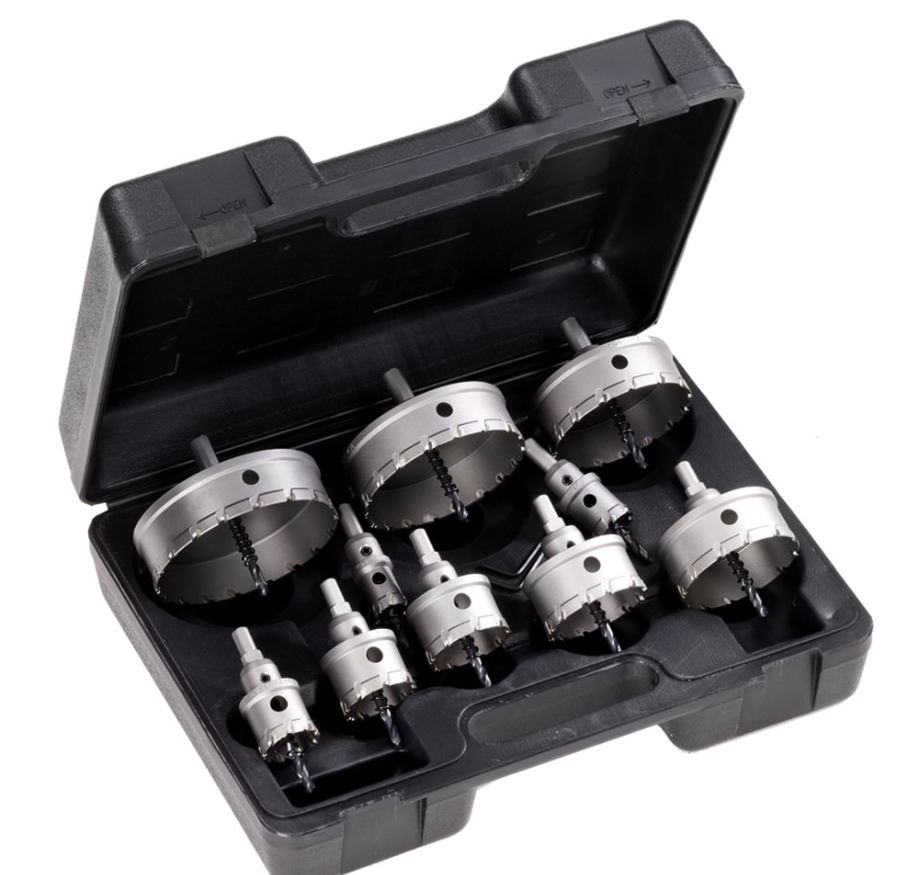
The FangDa Hole Saw Cutter is designed for this kind of work. It belongs to the group of tools made for cutting round openings in different base materials, and its value is usually found in its practical structure rather than in complicated operation. It is a tool that can support routine drilling tasks where a standard twist drill is not enough, especially when the goal is not just to create a pilot point, but to open a larger and more defined circular area.
The basic idea behind this tool is simple. Instead of removing an entire solid circle of material, it cuts around the edge of the circle. This makes it useful for many tasks where shape matters just as much as speed and control. In many cases, the result is a clean opening that can be used right away for installation or further finishing.
A circular cutter of this type usually connects to a drill and relies on the drill' rotation to guide the cutting action. The central pilot bit helps steady the position, while the outer cutting edge forms the perimeter of the hole. As the tool moves forward, material is removed along the outline rather than through the full center at once.
This working method brings several practical advantages. The operator can mark a point, place the pilot bit at the center, and let the saw body shape the opening. Because the cutting action follows a round path, the edge is often more regular than what may be produced by improvised cutting methods. For tasks that demand a clean surface opening, this matters a great deal.
It is also useful in cases where repeated opening work is needed. When the same kind of hole must be made many times during a project, a dedicated circular cutter can simplify the process. The user does not need to change methods for each opening. Instead, the same principle can be followed from start to finish, with consistent handling.
In practical terms, this tool is often chosen when the user wants a controlled opening without unnecessary damage to the surrounding surface. That makes it relevant not only for production work, but also for maintenance, renovation, cabinet fitting, electrical installation, plumbing preparation, and many other application scenes.
The shape of the opening is the first thing to consider. This tool is used for round holes, especially when the opening needs to accept a fitting, a connector, a pipe, or a fixture. The opening is not only a passage; it is often part of a finished assembly.
One common use is for cable or wire passage. In panels, cabinets, desks, and machine housings, a circular opening may be needed so wires can pass through without bending sharply or being pressed against a corner. A round cut can help the layout look orderly and can support cleaner routing.
Another common use is for pipe access. In plumbing-related work or equipment installation, some components need an opening that allows a pipe or hose to pass through a board, wall panel, or enclosure. A circular cutter can create a passage that matches that need more naturally than a basic drill bit.
It is also used for fittings in furniture and cabinetry. Many furniture parts need openings for locks, handles, hinges, inserts, or connectors. A controlled circular cut can help these pieces fit into place in a more organized way. In this kind of work, the shape of the hole is often as important as the position.
Lighting and fixture installation is another area where this tool has a place. Recessed parts, face-mounted accessories, and similar components often rely on a round opening. When the opening is made cleanly, installation can proceed with less correction work.
Ventilation openings are also part of the picture. In some cases, a round passage is needed to support airflow or to allow a small component to sit through a panel. This is common in enclosures, cabinets, and equipment covers, where air movement and neat routing both matter.
One reason this tool is widely discussed is that it can be applied to different materials when used with care and with the right setup. The material type should always guide the selection of speed, pressure, and handling method.
Wood is one of the most common materials. Softwood, hardwood, plywood, and engineered boards can all be worked with circular cutting tools. In wood applications, the main concern is often edge quality and control of splintering. A stable setup and steady pressure help the cut stay neat. For furniture, cabinet parts, wooden panels, and interior fitting tasks, wood is one of the most familiar working surfaces.
Metal requires more attention. Thin sheet metal and certain metal panels may be cut with the right tool choice and a suitable drilling setup. The user must keep the cut controlled and avoid forcing the tool. Metal work usually calls for patience, because heat, friction, and edge wear can become more noticeable. The material is less forgiving than wood, so correct handling is important. When the tool is used in metal applications, the expected result is a working opening, but the approach should always respect the material' resistance.
Plastic is another common base material. Many plastic sheets, covers, housings, and panels need circular openings for fitting or access. Plastic can be easier to cut than metal, but it may also crack, melt, or deform if the process is rushed. A calm and steady method is usually preferred. For enclosure work, display panels, and household parts, plastic is often a practical use case.
Composite boards and layered materials may also be encountered. These surfaces can behave differently depending on what layers are present. Some may cut smoothly, while others may resist at certain points or show edge wear. In these situations, careful marking and measured handling become especially important.
The main point is that the tool is not limited to one material family. It can serve across wood, metal, plastic, and related surfaces, provided the user matches the cutting method to the actual workpiece. That flexibility is part of why it is found in many tool collections.
A round opening is not just a hole. In many projects, it is part of a larger system. If the opening is too rough, too uneven, or misplaced, the part that follows may not sit correctly. That can affect appearance, stability, and assembly.
Shape control matters because many accessories are designed to sit within or around a round cut. A cable grommet, pipe collar, connector, lamp component, or fitting ring often depends on a fairly regular opening. When the cut is controlled, the surrounding part can sit more naturally and the finished result may look more organized.
This is also important when the opening sits on a visible surface. On furniture, panels, enclosures, or decorative pieces, the hole is not hidden. It becomes part of the visible design. A tool that supports a neater round edge can therefore contribute to the overall appearance of the finished work.
There is also the matter of time and repeatability. In a project with several openings, consistency helps the work move forward more smoothly. The user does not need to correct irregular shapes after every cut. Instead, the process can continue in a steady rhythm, which is useful for both small shops and larger operations.
In many workshops today, tools are selected not only for cutting ability, but also for how smoothly they fit into daily work habits. A round cutter has a clear role because it answers a common need without requiring a complex setup. It is straightforward to understand, practical to store, and easy to assign to specific tasks.
For installers, it may be used during furniture assembly, cabinet opening work, and panel preparation. For maintenance staff, it may support access openings in enclosures or covers. For makers and fabricators, it can be part of a workflow that includes marking, pilot drilling, circular cutting, and final adjustment.
Its usefulness also comes from the fact that the same basic tool can handle different project types. One day it may be used on wood panels. Another day it may be needed for a plastic cover or a thin metal sheet. That kind of cross-task value makes it a familiar item in many tool kits.
The tool also matches well with practical work where the final opening must correspond to another object. Rather than creating an opening and then reshaping it by hand, the user can begin with a circular method that already points toward the needed result. This can reduce unnecessary correction and make the task more organized from the start.
Choosing this kind of tool is less about chasing special claims and more about matching the tool to the task. The first question is simple: does the job require a round hole? If the answer is yes, the next question is whether the surface is wood, metal, plastic, or a related material. After that, the user can think about the size of the opening needed, the finish expected, and the surrounding material condition.
It is also wise to think about the project' purpose. A hidden service opening may have different requirements from a visible furniture cutout. A passage for wiring may be different from a cut for a fixture. In each case, the tool serves the same general function, but the handling style should reflect the actual use.
For many users, the attraction of this cutter lies in its balance of simplicity and usefulness. It does not ask the operator to work with an unfamiliar process. It turns a common circular requirement into a repeatable task. That is a practical strength, especially in settings where reliability of method matters more than dramatic claims.
So, what is this tool in plain terms? It is a circular cutting solution made for producing round openings in a controlled way. It is used when a project requires clean access holes, fitting holes, pass-through holes, or installation holes across different materials. Wood, metal, and plastic are all part of its working range, and the opening it creates can support many kinds of assembly and finishing work.
For anyone handling panel work, fixture preparation, cabinet fitting, or utility openings, FangDa offers a straightforward option that fits the needs of ordinary workshop and installation tasks. Its value comes from practical use, clear purpose, and adaptability across common materials. In a working environment where each opening has a function, that kind of tool can become a steady part of the process.
A round opening may seem like a small detail, but in real work it often determines whether a part fits well, whether a surface looks orderly, and whether installation moves forward without interruption. A tool designed for this purpose gives the user a more controlled path from marking to finishing.
When the task calls for a circular hole in wood, metal, plastic, or another common material, this type of cutter can play a useful role. It is not about decoration or exaggeration. It is about doing a familiar job in a direct and workable way. For that reason, it continues to have a place in workshops, factories, and project sites where neat openings are part of everyday work.

 4008-253-777
Industrial Zone, Furong Town, Yueqing City, Zhejiang Province, China


+86-0577-62298888
+86-0577-62299999

+86-0577-62295777
+86-0577-62297777
Copyright © Fangda Holding Co., Ltd. All Rights Reserved
Metal Drill Bit Sets Suppliers
