



Industry News
A hole saw cutter manufacturer sits in a very practical corner of the tool industry. The job sounds simple on paper. Make circular cutting tools. Ship them out. Done.
In reality, the work stretches across design thinking, material handling, production control, and small adjustments that only become visible when the tool is actually used on site. A construction worker cutting through a panel or an installer working on wiring never sees the factory process, but the tool in hand carries every decision made inside it.
We are looks at that process in a grounded way. Less theory. More real movement from factory floor to job site use.
A hole saw cutter manufacturer produces round cutting tools used to create clean circular openings in different materials. Wood, metal, plastic, wall panels, and mixed surfaces all fall into this range.
But production is not just forming a shape. It is about controlling how that shape behaves when spinning under pressure.
The manufacturer's role usually includes:
Each step is small on its own. Together, they decide whether the tool feels stable or unpredictable during operation.
The process starts long before the tool looks like a hole saw. Raw material selection comes first, and it quietly shapes everything that follows.
After that, the material is shaped into a circular body. At this stage, balance matters more than appearance. If the structure is slightly uneven, rotation will feel unstable later on.
Then comes the cutting edge formation. This part is where the tool begins to "decide" how it will cut. The spacing, angle, and hardness of the edge affect how it enters different surfaces.
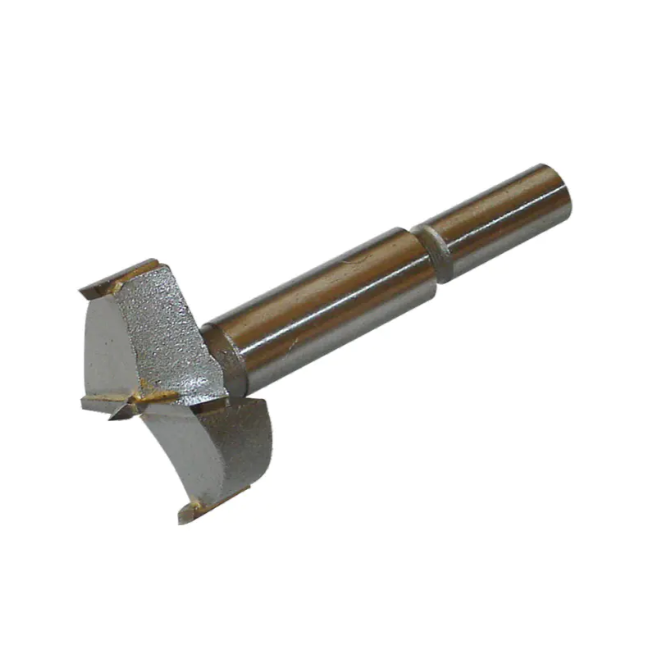
After shaping, assembly brings the parts together. The center guide, circular body, and connection point must work as one unit. If alignment is off, even slightly, the cutting path can drift.
Before packaging, tools are checked again. Not in a laboratory sense, but in a practical way. Does it rotate smoothly. Does it stay stable under pressure. Does it behave consistently across repeated use.
Material is not just a background detail. It is the base of performance.
A hole saw cutter is constantly under stress during use. Rotation, friction, and pressure all act at the same time. If the material cannot handle this combination, the tool loses stability quickly.
Manufacturers often separate material roles:
| Part of Tool | What It Needs to Do | Why It Matters |
|---|---|---|
| Cutting edge | Stay sharp under pressure | Keeps cutting smooth |
| Circular body | Stay balanced during rotation | Prevents vibration |
| Center connection | Hold firm during use | Maintains stability |
Small changes in material behavior can shift the entire cutting feel. That is why selection is handled carefully at the early stage.
A tool used in a quiet workshop behaves differently from one used on a busy construction site. The environment changes everything.
Manufacturers adjust designs based on how and where the tool will be used. There is no single "standard" working condition.
Common usage environments include:
Each situation affects how the tool is shaped. Some need smoother cutting. Some need stronger resistance. Some need easier control under pressure.
Instead of redesigning from scratch each time, manufacturers adjust small parts of the structure.
Once a Metal Hole Saw Cutter Set is attached to a drill, the working behavior becomes easy to describe but harder to control in practice.
The center guide touches the surface first. This keeps the tool from sliding. After that, the circular edge begins to bite into the material.
Only the outer ring is cut. The center stays intact. This reduces resistance compared to full-area cutting.
As the tool moves deeper, material starts to form a core inside the saw. That core is later removed.
The process depends heavily on balance:
It is less about speed and more about steady control.
From the outside, the tool is simple. A circle spins, and a hole appears. Inside real work conditions, stability is constantly tested.
Rotation creates vibration. Material resistance changes depending on surface type. Even slight imbalance in structure can become noticeable during use.
Manufacturers focus on three stability points:
If one of these shifts, the cutting experience changes immediately. The tool may feel rough, slow, or difficult to control.
Even well-made tools face challenges once they reach the field.
Heat buildup is common during continuous cutting. Friction increases as the tool stays in contact with material. If not managed, performance drops.
Another issue is clogging. Material chips can gather inside the tool, reducing cutting efficiency.
There is also the early-stage slip problem. If positioning is not stable, the tool may drift at the start of cutting.
Edge wear appears over time, especially in repeated use environments. It changes how smooth the cut feels.
These are not rare issues. They are part of normal usage patterns, which manufacturers try to reduce through design adjustments.
Feedback does not come in formal reports most of the time. It comes from users noticing small differences during work.
A tool feels smoother. Another feels slightly unstable. One lasts longer under pressure. Another loses sharpness faster.
Manufacturers take these signals and adjust production steps. Sometimes it is a small change in edge shaping. Sometimes it is a material shift. Sometimes it is balance refinement.
The changes are usually gradual. Not dramatic redesigns. Just steady tuning.
This keeps tools familiar while improving behavior over time.
Despite new cutting methods in modern industry, hole saw cutters remain widely used.
The reason is simple. The tool fits into many workflows without needing complex setup. It works with common drills and handles a wide range of materials.
Industries use it because it is direct. No extra system. No complicated preparation.
It shows up in:
The need for round openings does not disappear. And this tool continues to match that need in a practical way.
Manufacturing is not only about producing tools. It is about keeping those tools aligned with how people actually work.
As materials change and working conditions shift, small adjustments in design and production become necessary. Not because the tool is outdated, but because the environment around it keeps moving.
A hole saw cutter manufacturer stays in that loop. Observing use, adjusting structure, and maintaining consistency across production cycles.
The result is a tool that looks simple, but carries a long chain of decisions behind every cut.

 4008-253-777
Industrial Zone, Furong Town, Yueqing City, Zhejiang Province, China


+86-0577-62298888
+86-0577-62299999

+86-0577-62295777
+86-0577-62297777
Copyright © Fangda Holding Co., Ltd. All Rights Reserved
Metal Drill Bit Sets Suppliers
