



Industry News
On many job sites, the need to cut a clean, round opening comes up without much notice. A worker may need to run a pipe through a wall panel. An installer may need space for wiring in a cabinet. In these situations, the shape of the cut matters as much as the speed. That is where an industrial hole saw finds its place.
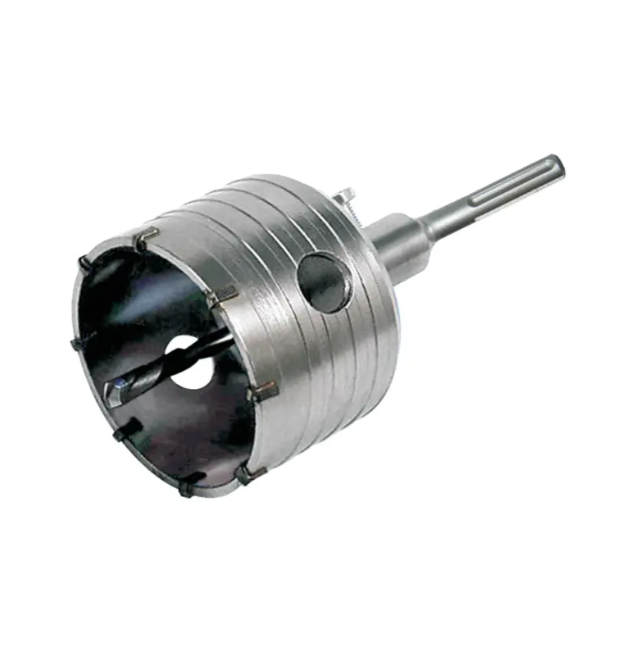
At a glance, it looks simple. A circular cutting edge, a central guide, and a connection to a power tool. Yet the way it works, and the way it is used, reflects years of practical adjustment in manufacturing and field work. It is not just a cutting tool. It is a tool designed to remove only what is needed, while leaving the surrounding material as intact as possible.
An industrial hole saw is a circular cutting tool used to create round holes in different materials. Instead of cutting through the entire area like a drill bit, it removes only the outer ring of the hole. The center part remains as a solid core, which is often removed after the cut.
This design reduces effort. Less material is cut, and less heat builds up during use. The result is a smoother cutting process, especially when working with larger hole sizes.
The tool is usually attached to a handheld drill or a fixed machine. Once connected, it
rotates at a steady speed, allowing the cutting edge to press into the surface.
Its structure can be described in simple parts:
Each part plays a role, but the interaction between them is what defines the tool's performance.
The working process is straightforward but requires control. When the tool begins to rotate, the central guide touches the material first. This helps position the hole saw and prevents it from slipping.
As pressure is applied, the outer cutting edge starts to engage with the surface. The teeth move in a circular path, gradually cutting deeper into the material. Instead of removing the entire surface area, only a ring is cut. This reduces resistance and allows smoother progress.
The cut continues until the desired depth is reached or the material is fully penetrated. At that point, a circular piece remains inside the tool. This piece is often called the core. It is removed before the next use.
The process can be broken down into stages:
Each stage depends on balance. Too much pressure can cause uneven cutting. Too little pressure can slow the process and increase friction.
The circular design is not just for shape. It changes how the cutting force is distributed.
When a standard drill bit is used, it removes all the material within the hole. This creates more resistance. With a hole saw, only the perimeter is cut. This means less material is removed, and the tool can work more efficiently.
This design also helps maintain the structure of the surrounding material. Since the center remains untouched during cutting, there is less stress on the surface. This can reduce cracking or distortion, especially in materials that are sensitive to pressure.
Another benefit is consistency. The circular edge ensures that the hole shape remains even, which is important when the opening needs to match a fitting or component.
On-site hole saws can process plenty of different raw materials. Workers pick corresponding saw models based on what they're cutting, yet the core cutting principle never changes.
Regular processing materials cover:
Every material cuts differently. Wood turns into coarse scraps when bored, metals leave tiny fine filings, and plastics easily melt from accumulated cutting heat. Operators tweak rotational speed and feed pressure to match each material's traits.
No matter the slight structural tweaks made for specific uses, these hole saws follow the same basic cutting design overall.
Hole saws are not all identical. Different types are designed to handle different tasks. While the overall structure stays similar, the cutting edge and body design may change.
Some common types include:
These variations allow users to choose a tool that matches their working conditions. Instead of forcing one tool to handle every task, different designs provide more control over the cutting process.
Keeping hole saw steady is always a core concern in cutting work. The tool cuts in a circular path, and slight wobble will ruin finished hole quality.
The centre pilot drill acts as the main positioning anchor; it locks the saw in place when starting to bore. After outer teeth sink into material, the formed circular kerf further restricts sideways shift and keeps travel on track.
Proper hand operation also counts a lot. Firm grip and consistent feeding pressure stop the saw from tipping. Jerky hand movements leave jagged cuts or scratch workpiece surfaces.
For high-precision fixed equipment, auxiliary brackets and positioning jigs get fitted to boost running stability.
Even though the tool is simple, certain issues can appear during use.
One common problem is overheating. When the tool rotates too fast or pressure is too high, heat builds up. This can affect both the tool and the material.
Another issue is clogging. Chips or shavings can collect inside the tool, making it harder to cut. Clearing the core regularly helps maintain performance.
There can also be cases where the tool slips at the start. This often happens when the surface is smooth. Proper positioning and controlled startup help reduce this risk.
Edge roughness is another concern. If the tool is not stable, the cut may not be clean. Adjusting speed and maintaining steady pressure usually improves the result.
The continued use of Hole saws comes down to practicality. The tool performs a specific task in a direct way. It does not require complex setup. It works with common equipment. It adapts to different materials without major changes.
In construction, it helps create openings for installations. In manufacturing, it supports assembly processes. In maintenance work, it allows quick modifications without replacing entire sections.
Its value is not in complexity, but in consistency. It does one job, and it does it in a way that fits into many workflows.
Modern work environments often combine speed with precision. Tools are expected to perform reliably while keeping processes simple.
The industrial hole saw fits this approach. It allows workers to create accurate openings without complicated steps. It can be used in small workshops as well as larger production settings.
It also works well alongside other tools. It does not replace them, but it complements them. Where a circular opening is needed, it provides a direct solution.
As materials and applications continue to evolve, the tool remains relevant because its core function stays the same. It removes only what is needed, and it does so in a controlled, repeatable way.

 4008-253-777
Industrial Zone, Furong Town, Yueqing City, Zhejiang Province, China


+86-0577-62298888
+86-0577-62299999

+86-0577-62295777
+86-0577-62297777
Copyright © Fangda Holding Co., Ltd. All Rights Reserved
Metal Drill Bit Sets Suppliers
