



Industry News
Home / News / Industry News / What Is a Wood Cutting Saw Blade: A Complete Guide for Woodworkers, Builders
A wood cutting saw blade might look like a simple steel disc with teeth, but it is the single most important part that decides whether a cut comes out clean, fast, or turns into a splintered mess. Every table saw, miter saw, circular saw, track saw, and even some band saws depend entirely on the blade spinning in front of the motor. Understanding what these blades actually are, how they differ from one another, and how to keep them performing well can save time, money, and frustration on every project.
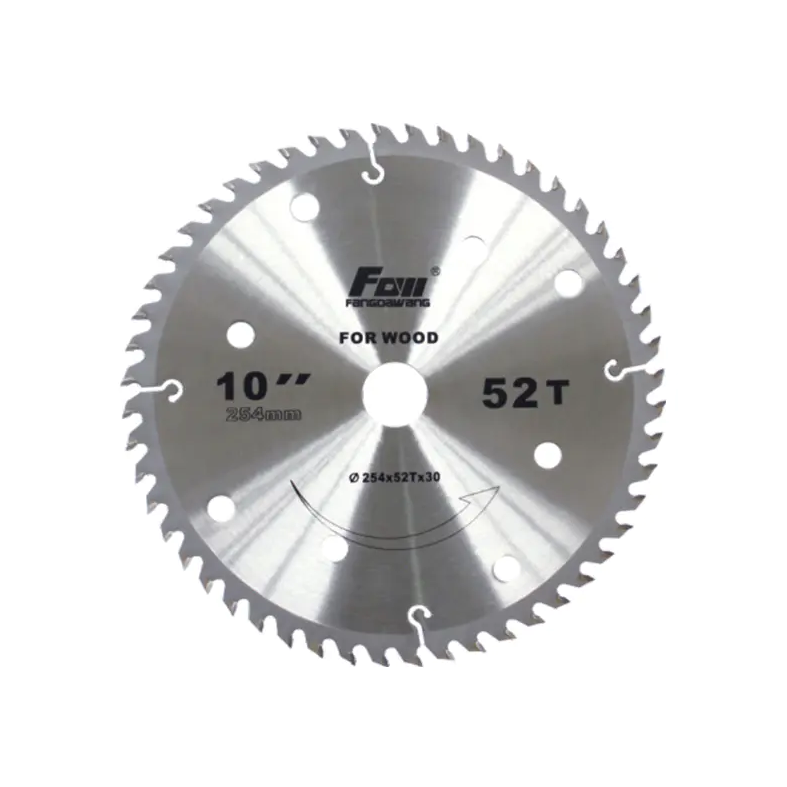
At its core, a wood cutting saw blade is a flat, round plate—usually made from high-grade steel—with a center hole (the arbor) that fits onto the saw's shaft. Around the outer rim are teeth that do the actual cutting. Each tooth acts like a tiny chisel and knife combined: the sharp edge slices wood fibers while the shape behind it clears away the waste. How those teeth are designed, how many there are, and what material they're made from completely changes the result.
Woodworkers rarely get by with just one blade. Instead, they keep a small collection for different situations:
Rip blades excel at cutting with the grain. They usually have deep gullets (the curved spaces between teeth) and fewer teeth overall so large chips can escape quickly without clogging.
Crosscut blades go against the grain and produce much smoother edges. They carry many more teeth—sometimes triple the number of a rip blade—set in alternating patterns that shear fibers cleanly on both sides of the cut.
Combination or general-purpose blades try to do both jobs reasonably well. A common pattern is four cutting teeth followed by a deeper gullet and then a flat-top raker tooth that clears debris. Many weekend warriors and job-site carpenters keep only this style on their saws.
Dado sets create wide, flat-bottomed channels for shelf dados, plywood joinery, or lap joints. They come either as stacked sets of chippers and outer blades or as single “wobble” blades that tilt slightly side to side.
Finishing or ultra-smooth blades carry very high tooth counts and are favorites for cutting plywood, melamine, or expensive hardwoods where tear-out would ruin the piece.
Thin-kerf blades remove less material (often about 30 % less than standard blades). They're easier on lower-powered saws, reduce waste, and leave an even cleaner edge, though they can flex more if not handled carefully.
The body of most modern blades is laser-cut from hardened steel and then tensioned so it stays flat at high speeds. Expansion slots—thin, curved cuts near the rim—let the metal grow when it gets hot without warping.
The real cutting happens at the tips. Plain steel teeth dull quickly, so almost every serious blade sold today has carbide tips brazed onto each tooth. Carbide stays sharp many times longer and can be re-sharpened several times before the tips become too small.
Some blades add extra coatings (often gold, blue, or black) that lower friction, keep resin from sticking, and help the blade run cooler and quieter. Anti-vibration slots or copper plugs in the body also reduce ringing and make long cutting sessions more pleasant.
Different woods behave differently:
Many blades get thrown away too early simply because they're dirty rather than dull. Pine and other softwoods leave sticky pitch that builds up on the sides and behind the teeth. A ten-minute soak in a simple household cleaner or dedicated pitch remover, followed by scrubbing with a brass or nylon brush, often restores the original performance.
When the carbide finally does dull, local sharpening shops or mail-in services can bring most blades back to factory sharpness several times. A typical carbide-tipped blade can be sharpened five to ten times before the tips are used up.
Storage matters too. Hanging blades on a peg or keeping them in individual sleeves prevents edges from knocking together and chipping. A light coat of oil or corrosion inhibitor protects against rust-prone steel bodies in humid workshops.
A spinning saw blade has no conscience. A few rules keep fingers attached:
Always verify the blade diameter, arbor size, and maximum RPM match the saw's requirements.
Check the direction arrow—installing a blade backwards is surprisingly common and dangerous.
Use push sticks, featherboards, or grip blocks whenever hands would come within six inches of the blade.
Keep a riving knife or splitter aligned with the blade to prevent the kerf from closing and kicking the board back.
Wait for the blade to reach full speed before feeding wood, and never force material faster than the teeth can clear chips comfortably.
| Blade Family | Typical Tooth Count | Primary Strength | Typical Use Scenario |
| Rip | 16–30 | Fast stock removal | Breaking down rough lumber |
| Crosscut | 60–100 | Clean edges across grain | Trim work, plywood, fine furniture |
| Combination | 40–60 | Good all-around performance | Job sites, small shops with one saw |
Manufacturers keep pushing quieter designs with laser-cut damping slots and lighter bodies that reduce vibration. Some brands now offer blades with replaceable carbide inserts so only the worn tips get swapped instead of the entire blade. Eco-friendly lines made with recycled steel or reduced packaging are also appearing.
At the end of the day, a wood cutting saw blade remains one of the simplest yet most critical tools in any shop. Keep a few different styles clean and sharp, match them thoughtfully to the material and task, and almost any woodworking dream—from a child's toy to a heirloom dining table—becomes possible.

 4008-253-777
Industrial Zone, Furong Town, Yueqing City, Zhejiang Province, China


+86-0577-62298888
+86-0577-62299999

+86-0577-62295777
+86-0577-62297777
Copyright © Fangda Holding Co., Ltd. All Rights Reserved
Metal Drill Bit Sets Suppliers
